
Chemical Industry Recruiters for Chemists and Lab Teams
Formulation, analytical and QC chemists plus chemical technicians, recruited from the corner of the chemical industry you already work in.
Where do I find a chemist who already knows our chemistry?
Chemical industry recruiters find chemists, chemical technicians and QC lab staff for companies that make coatings, adhesives, polymers, cleaners, agricultural and specialty chemicals. KORE1 fills those seats as contract, direct-hire or contract-to-hire placements.
Last updated: September 30, 2026
Usually next door. The chemical industry is really several industries sharing one code, and a chemist moves most easily inside the corner they already know. A polymer chemist reads a resin spec on day one. A pharma chemist can learn it.
They’re still learning, though. I minored in chemistry back when I planned on medical school. Didn’t go. What stuck was the habit of asking a chemist about the chemistry before asking about the job, and it’s the first thing a chemistry recruiter should do.
- This desk
- Chemists, chemical technicians, QC and R&D lab staff, and technical service chemists at companies that make chemicals and formulated products.
- Routed elsewhere
- Chemical and process engineers go to chemical engineering staffing and process engineering staffing, plant operators to our manufacturing recruiters, and drug-maker labs to pharmaceutical staffing.
This desk sits inside KORE1’s scientific staffing agency, next to our life sciences staffing group, and it shares recruiters and candidate networks with both of them, which matters when a search crosses the line between a drug maker and a chemical plant. Our published twelve-month retention of 92% covers all of them.
Chemical Recruiters Start With Which Chemical Industry You’re In
Federal wage data counts chemical manufacturing as one sector. The chemists inside it sort into two groups that staff their labs very differently. Pharma sits at the end for comparison.
The chemical industry, by lab
BLS OEWS · May 2025 · U.S.
3251 · 3252 · 3253 · 3259
Bs
Basic, polymer, farm and specialty chemicals
- Chemists
- 8,900
- Chemist pay
- $103,580
Technicians per 10 chemists 10.9
3255 · 3256
Cf
Coatings, adhesives, cleaners and personal care
- Chemists
- 5,010
- Chemist pay
- $82,870
Technicians per 10 chemists 5.0
3254 · for comparison
Rx
Pharmaceuticals and medicine
- Chemists
- 13,610
- Chemist pay
- $80,440
Technicians per 10 chemists 4.0
Same sector code. Two very different labs. (Yes, Cf is already californium. We borrowed it.)
Start with the dots. Makers of basic, polymer, farm and specialty chemicals employ 9,740 chemical technicians against 8,900 chemists, so their labs run more technicians than chemists, which usually means shift testing on every lot that leaves a continuous process. Coatings, adhesive, cleaner and personal care makers flip that. Formulators run those labs.
Then the pay. The middle chemist in the first group earns $103,580, which is $23,140 above the pharma median, so a pharma chemist can cross into that corner without taking a pay cut, while selling the same move in the other direction is a much harder conversation to have with a candidate. Know that before the offer, and if the seat is a QC bench, the metro-by-metro numbers sit in KORE1’s QC analyst salary guide. Figures are May 2025 national estimates from the federal Occupational Employment and Wage Statistics survey run by BLS, sorted by the Census Bureau’s NAICS 325 industry groups.
Chemistry Recruiters Should Ask About the Chemistry
A title tells you almost nothing here. “Chemist II” at an epoxy maker and “Chemist II” at a surfactant plant are different jobs with different instruments. Same title. So the screen starts with the materials.
- Which chemistries have you formulated or tested? Acrylics, epoxies, urethanes, silicones, surfactants?
- What was on your bench every day, GC, HPLC, FTIR, ICP, a rheometer or a DSC?
- Walk me through the last batch you held.
- Have you authored a safety data sheet, or only read one?
That last one matters. Every hazardous chemical a company ships needs a safety data sheet in the sixteen-section format set by OSHA’s Hazard Communication Standard, which OSHA updated in 2024, and somebody with real chemistry has to classify the hazards and stand behind the answers. Small companies often find out who that is when the person quits. Bad timing.
Lab safety has its own rule, too. The OSHA laboratory standard asks for a written chemical hygiene plan and a chemical hygiene officer. Plenty of senior chemists have held that role on the side, and few of them list it. Ask.
The Synergistic Salesperson, and the Chemist Who Sells
I call myself the Synergistic Salesperson. Odd name. It means I sell for a living, and I’m a science nerd who picked these industries on purpose.
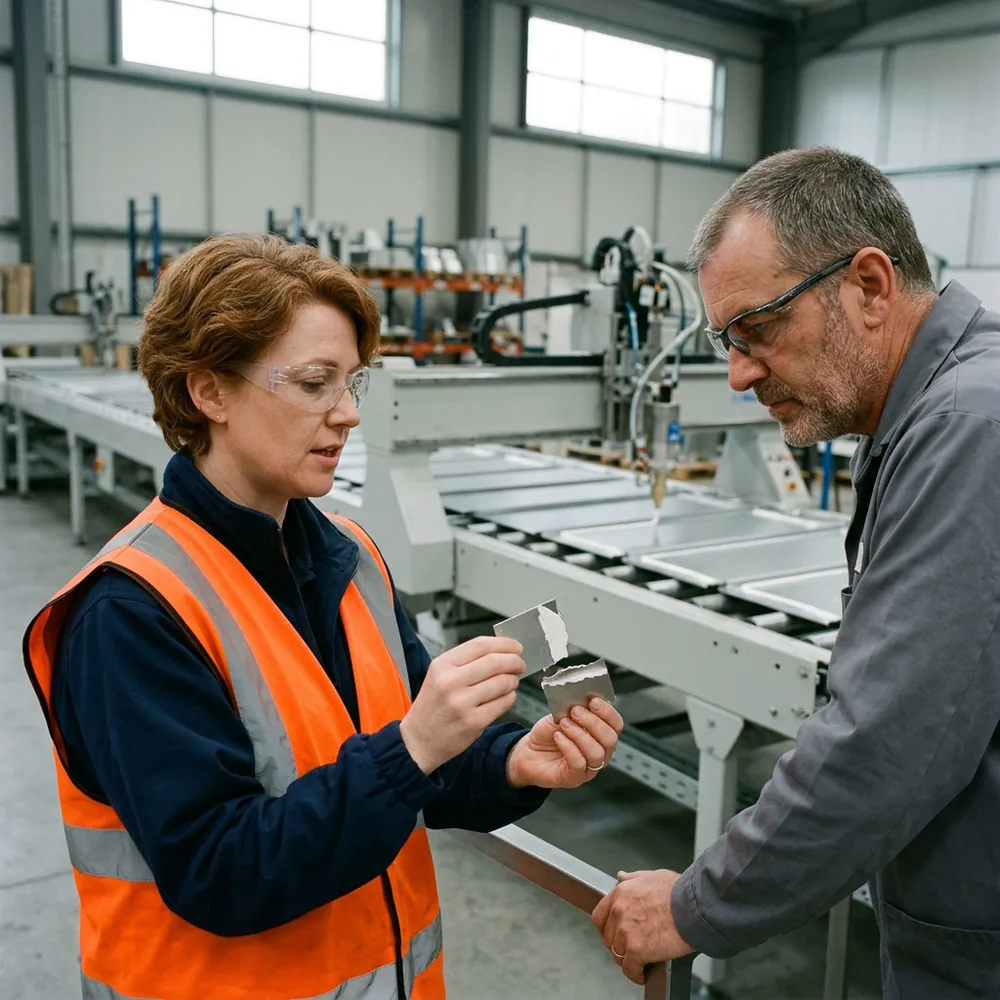
Chemical companies have their own version of that person. Technical service and applications chemists sit between the lab and the customer, and when an adhesive lets go on somebody’s line, they’re the one standing next to it with a torn test coupon, explaining the chemistry to a production supervisor who wants the line running again by second shift.
It’s the hardest chemistry seat to fill. Pure lab people often don’t want the travel. Pure salespeople can’t answer the second question. You need both.
So we ask candidates what they actually want, the way a friend would, before we ever describe the job. How many nights away a month is fine? Do they miss the bench? The answers sort the list fast.
27,530
chemists employed in U.S. chemical manufacturing
17,600
chemical technicians in the same sector
$88,890
median yearly pay for chemists across chemical manufacturing
92%
still on the job twelve months after a KORE1 placement
Sources: Occupational Employment and Wage Statistics (BLS), May 2025, NAICS 325. KORE1 retention data.
The Chemistry Staffing Seats We Fill
The tag on every card shows where in the building that chemist usually works. Smaller companies usually blend two or three of these into one person, which works as long as the job description admits it and the pay reflects the stretch that comes with it.
R&D lab
Formulation chemists
Recipe people for coatings, adhesives, sealants, cleaners and personal care, matched on the chemistries they’ve actually run.
QC lab
Analytical and QC chemists
Method work, lot release and the instrument list your lab runs, from chromatography to thermal analysis.
QC lab, shifts
Chemical technicians
Shift testers who pull samples, run standard methods and flag a lot before it ships, often around the clock.
EHS and regulatory
Product stewardship chemists
Hazard classification, safety data sheets and TSCA inventory questions, owned by one person instead of spread thin.
We fill these as direct hire, through contract staffing, or on a contract-to-hire basis when watching a formulator through a few product trials first would help. A plant covering a second QC shift for a busy season usually starts on contract. A lead formulator is almost always direct. Recipes walk.
Some chemistry seats belong to other KORE1 desks. Bench roles outside chemical manufacturing run through our laboratory staffing agency, whole QC departments through quality control staffing, plant quality engineers through quality engineering staffing, and permanent leaders at drug makers through the pharmaceutical recruiters desk.
Common Questions
What do chemical industry recruiters actually do?
Short answer, they find chemists and lab staff who already know your chemistry. Materials first. Title second. Then KORE1 fills the seat on contract or direct hire.
Can a pharma chemist move into a coatings or specialty chemical lab?
Often, yes. Analytical skills carry over well, and May 2025 BLS data puts the median chemist in basic and specialty chemicals $23,140 above the pharma median. Formulation is the harder jump. A pharma chemist who has spent years running a validated method exactly the same way every time will need a while to get comfortable changing the recipe itself, and some never want to.
Do you recruit chemical engineers too?
Different desk, same phone number. Chemical and process engineers go to KORE1’s engineering recruiters, because that screen is about unit operations and plant design. Send both seats. We’ll route them.
How much does a chemist earn in chemical manufacturing?
$88,890 was the May 2025 median for chemists across U.S. chemical manufacturing, per federal wage data from BLS. It splits by corner of the industry. Basic, polymer and specialty makers paid a $103,580 median, while coatings, adhesives, cleaners and personal care paid $82,870.
Is chemistry staffing better on contract or direct hire?
Depends on the seat. Contract fits a second QC shift, a busy season or a method transfer with an end date. Direct hire fits formulators and lead chemists who carry product knowledge you don’t want walking out the door, and contract-to-hire works when you’d like to watch someone through a few product trials before you decide which of those two they are. Plenty of chemistry searches start that way.
Can you find someone to write our safety data sheets?
Sixteen sections, and a chemist has to stand behind most of them. KORE1 recruits product stewardship chemists who author safety data sheets under OSHA’s Hazard Communication Standard. Contract clears a backlog. Direct keeps it clear.
Tell Us About the Chemistry
Share what you make, what’s on the bench and whether the seat is R&D, QC or customer-facing. We’ll tell you where that chemist is working today, and what it takes to move them.
Let’s Connect →Expert in finding you the right talent, right away.
Prefer LinkedIn? Message Dave Manchester
