Last updated: October 15, 2026
Engineering Staffing Oklahoma City, OK
We recruit mechanical, electrical, aerospace and petroleum engineers for the air depot, its contractors, the utility and the oil companies.
Open an Oklahoma City Engineering Search
KORE1’s engineering staffing in Oklahoma City places mechanical, electrical, aerospace, petroleum and manufacturing engineers, plus the technicians beside them, with the Tinker depot and its contractors, the utility, oil and gas operators and metro manufacturers.
Most out-of-state budgets for Oklahoma City begin with a single figure. It’s $60,330. That was the metro’s average pay across every job in May 2025, per the Bureau of Labor Statistics wage survey, and it sits 13.5% under the national mean. Fine for plenty of hiring. Not for engineers. For them the discount points two ways at once.
Petroleum engineers here are almost nine times as common as the national share and paid 12.7% over it. Aerospace engineers are two and a half times as common and paid 13.5% under it.
Both pools are deep. They live in different pay worlds, though. Oil companies price the first one, while the second is priced in large part off the federal pay scale at Tinker Air Force Base, where the contractors working around the base end up hiring from exactly the same people the government does. Same metro. Opposite math. Budget a petroleum engineer off national data and the offer comes in $20,000 light, and do the same for an aerospace engineer and you’ve overpaid by about $19,000.
Our Oklahoma City IT staffing team takes the software, cloud and cyber searches. The Oklahoma City staffing agency desk handles office, finance and general roles. What’s left? The hangar, the wellsite, the substation and the plant floor. Those go to our engineering recruiters. KORE1 has been placing engineers as an engineering staffing agency since the company opened in 2005.
The Air Depot Sets the Price of an Aerospace Engineer
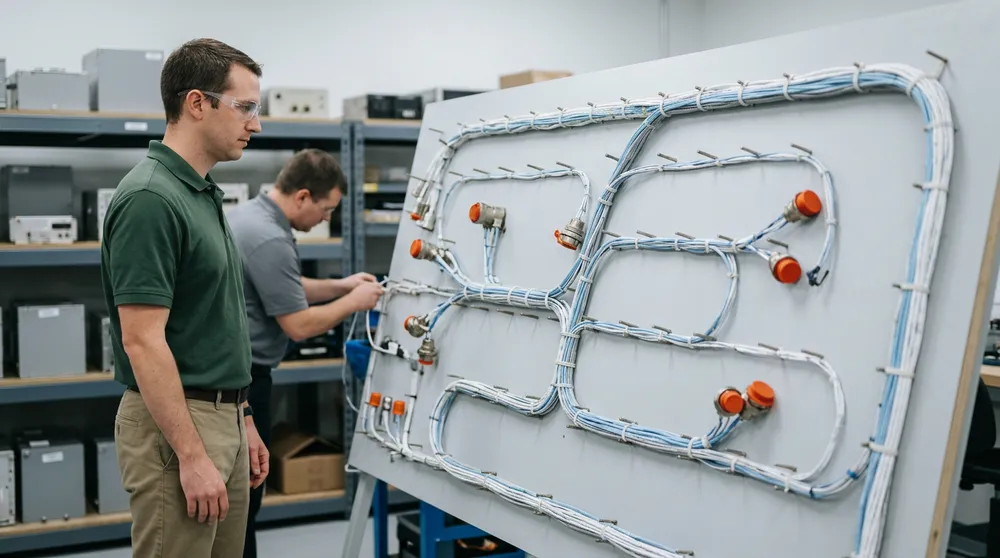
Tinker Air Force Base is the state’s largest single-site employer, with more than 25,000 personnel, and its air logistics complex alone runs over 9,000 people, who overhaul KC-46, KC-135, B-1B, B-52 and E-3 aircraft and the Navy’s E-6, plus engines from the old TF33 up to the F119. The next workload is already in the ground. This fall the Air Force broke ground on a bomber hangar that takes B-52 engine and radar upgrades first and B-21 depot work after that. It won’t be the last.
Pratt & Whitney opened a $255 million engine sustainment plant next to the base in late 2024, with more than 500 full-time staff on site and roughly 500 more contract and partner workers alongside them. Northrop Grumman says it has over 1,000 employees in Oklahoma. Add it up. The metro holds 3,310 aircraft mechanics, five and a half times the national share. That’s a deep bench.
Here’s the catch. A lot of the engineering on base is paid on the federal General Schedule, and Oklahoma City sits in the Rest of U.S. pay area at a 17.06% locality for 2026. Before any special engineer rate, a GS-13 tops out at $116,362, and contractor offers get read against that table anyway, because the candidate nearly always knows exactly which grade and step they’re sitting on today. Every time.
- Tinker’s own hiring forecast planned 253 engineering hires for fiscal 2024 and 2025 and named electronics, aerospace and materials engineers as the hardest to fill. On the log below, those are three of the rust-shaded zones sitting under the cutoff
- Aerospace engineers for structures, repair dispositions and sustainment. Clearances matter. U.S. citizenship or an active clearance trims the slate before experience does
- Avionics work falls to electronics engineers and embedded systems engineers, and the metro has 1,140 electronics engineers, 2.7 times the national share
- Depot lines run on flow days. Every day counts. The manufacturing engineers we send can explain what they took out of one
- A quality engineer on a defense program closes corrective actions under AS9100. Design engineers draw the modification and repair packages, which isn’t the same résumé at all. Not even close
Petroleum Engineers Are the One Pool Paid Over the Nation
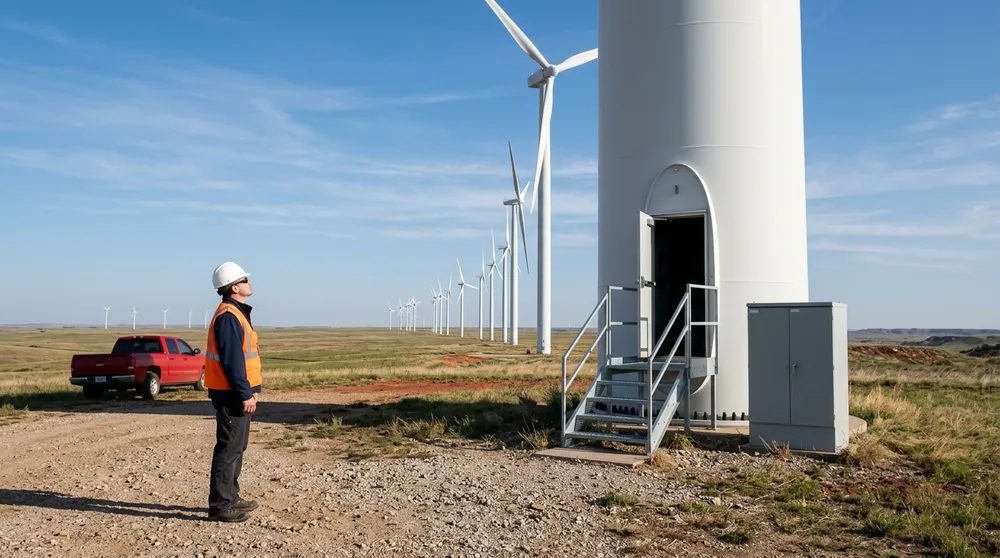
$177,150. That was the average Oklahoma City petroleum engineer’s pay in May 2025, 12.7% over the U.S. figure, in a metro where pay overall runs 13.5% under, which makes petroleum the one engineering job in Oklahoma City that beats the national rate for the same work by any real margin. About 700 of them work here. Nobody else comes close.
Oil has sat under this city for a long time. The Oklahoma City field’s discovery well came in on December 4, 1928, and the State Capitol’s first well, nicknamed Petunia, was completed on the Capitol grounds in 1942. Then the map moved. And it moved fast. Devon’s merger with Coterra closed in May with the head office going to Houston, and Expand Energy, the former Chesapeake, said in February it would move its headquarters there too, keeping Oklahoma City as a center of excellence. Continental Resources is still at 20 North Broadway.
That matters. A lot of the reservoir and production work stayed. Some of the people who approve the offers didn’t.
- OG&E’s capital plan puts $7.29 billion into its system from 2026 through 2030. Big money. The plan includes new units at Horseshoe Lake and a generation project at Tinker, and in May the utility asked regulators to approve a special contract with Google. That’s steady work for power systems engineers
- About 910 electrical engineers work in the metro, averaging $126,190, 0.9% over national. National data works for them. The electrical engineer salary guide we keep has the bands for each level
- Technicians cost more than you’d guess here. Industrial engineering technicians average $82,450, 16.6% over the U.S. rate, and electrical and electronic technicians run 6.6% over, which is why controls engineers often get asked to cover both seats. Plan for it
- Mechanical engineers are the one big discipline that really does take the discount. They average $101,300, 10.8% under national, and the metro has fewer of them than you’d expect, about 710 at a 0.55 location quotient. Mechanical engineering searches here are usually short on candidates, not on budget. Odd, but true
We’ll tell you which way to hire, and it isn’t always the one that pays us more. Turnarounds, depot surges and commissioning pushes tend to go to project staffing or a contract engineer for a set number of months. An opening that’s permanent, with no hard start date, runs as a direct hire search. Still figuring out the role? Contract-to-hire buys you a few months to watch it work.
Reading Oklahoma City Engineering Pay Like a Well Log
Oil people have read rock this way for about a century. Curves go side by side down a depth column, and any stretch where a curve crosses the cutoff gets shaded in as pay. We’ve drawn Oklahoma City’s engineering market the same way. Ten jobs, best paid at the top. The left track is concentration, meaning how much more common the job is here than nationally. The right one is pay as a share of the U.S. mean, cut off at 86.5%, the level every Oklahoma City job averages against the nation.
- Petroleum700 jobs
- Electrical910 jobs
- Civil880 jobs
- Health & safety190 jobs
- Industrial700 jobs
- Mechanical710 jobs
- Aerospace740 jobs
- Electronics1,140 jobs
- Environmental320 jobs
- Materials100 jobs
- 112.7%$177,150 · LQ 8.91
- 100.9%$126,190 · LQ 1.05
- 99.5%$108,120 · LQ 0.55
- 95.2%$113,980 · LQ 2.01
- 93.4%$102,690 · LQ 0.44
- 89.2%$101,300 · LQ 0.55
- 86.5%$122,940 · LQ 2.51
- 82.2%$112,850 · LQ 2.71
- 79.8%$90,070 · LQ 1.90
- 78.2%$94,030 · LQ 1.03
- Orange marks the pay zone, where engineering pay holds up better than the metro’s all-jobs ratio
- Grey marks jobs under the cutoff, where the discount runs deeper than for Oklahoma City jobs overall
- Rust marks jobs the metro has more of than the nation does (LQ over 1)
- The dashed line is the 86.5% cutoff, and the solid line is U.S. pay
So where does the rust run deepest? Petroleum, the only thick pool on the log that out-earns the nation. Aerospace lands on the cutoff almost to the dollar. Electronics, environmental and materials engineers are all more common here than nationally, and every one of them sits under the line. Funny how that works. In this town a deep bench tends to come with a deeper discount.
These are May 2025 figures from the BLS wage survey, mean annual pay and location quotient for each job, Oklahoma City metro set against the nation. An LQ of 1.0 is exactly the national share. We got the cutoff by dividing $60,330, the metro mean for every occupation, by $69,770, the national one. Keep one thing in mind. A mean blends a first-year engineer with a thirty-year one, so a young pool looks cheap partly because it’s young. Use it to set a budget, not to write an offer.
Where Oklahoma City Engineering Work Sits Across Seven Counties

Federal statisticians draw the Oklahoma City metro across seven counties, which are Canadian, Cleveland, Grady, Lincoln, Logan, McClain and Oklahoma. Drive times are short by big-city standards, yet the base, downtown and Norman each hire mostly from their own side of town, and an engineer settled in Edmond won’t always take a seat in Moore. Some will. Plenty won’t.
- Midwest City, Del City and Tinker The air logistics complex and its 9,000-plus people, Pratt & Whitney’s engine plant, the contractor offices ringing the base, and the new bomber hangar going up inside the fence
- Southwest Oklahoma City and Will Rogers The FAA’s Mike Monroney Aeronautical Center, home to more than 6,300 federal employees, contractors and students
- Downtown and Bricktown Continental Resources, OG&E’s headquarters on North Harvey, and the Devon and Expand teams that stayed when the head offices left
- Norman and Cleveland County Johnson Controls’ commercial HVAC plant, Hitachi Computer Products, and OU’s Advanced Radar Research Center, which won a $19.9 million NSF award last October to build mobile phased-array radars
- The turnpike corridors ACCESS Oklahoma, a turnpike program now pegged at $8.2 billion, whose first East-West Connector contract includes a Canadian River crossing of more than 1.25 miles, the longest bridge in the state. That’s work for structural engineers as much as road designers
- Canadian, Grady and McClain counties The near edge of the STACK and SCOOP oil plays, where operators keep field offices and run completion work across all three counties
- Inside city limits Oklahoma City paused new data center permits until the end of 2026, so data center engineering in town mostly sticks to projects that were already filed
Large slates pull from our engineering teams in Dallas, about three hours down I-35, and Houston, where two of the city’s former oil headquarters now sit. Reservoir slates that need Rockies basin experience often pull from our Denver engineering network too.
The Four Employer Groups Behind the Log
Four groups. One shared bench. Every zone on the log gets its shape from one of them. Some of them pay against the federal table and some against oil prices, and most recruit from the same people.
Air Depot & Defense
Depot maintenance on six aircraft types, engine overhaul next door, and a bomber hangar built for the B-21. Reliability engineers.
Oil & Gas Operators
Continental downtown, the operating teams that stayed after two head offices moved, and field work out in STACK and SCOOP. Oil and gas staffing.
Roads, Bridges & Grid
Turnpike work, MAPS 4 city projects, and the substations and lines a growing metro keeps adding. Civil engineers.
HVAC & Equipment Makers
Commercial HVAC in Norman, valves and regulators built for the oilfield, and electronics for computers and radar. HVAC engineers.
Common Questions About Oklahoma City Engineering Searches
What should an Oklahoma City engineering budget look like?
$101,300 was the average Oklahoma City mechanical engineer’s pay in May 2025, 10.8% below the national figure. Electrical engineers averaged $126,190, slightly above it. So no single local discount works. Petroleum ran $177,150 and aerospace $122,940. Check both. For pay by experience level, see the mechanical engineer salary guide.
Why are aerospace engineers paid less in Oklahoma City than nationally?
Because much of the local market is priced off the federal General Schedule, and Oklahoma City sits in its Rest of U.S. pay area, with a 17.06% locality for 2026. Aerospace engineers here averaged $122,940 in May 2025, 13.5% under national, and because the contractors around Tinker recruit the same engineers, their offers end up measured against a GS step the candidate already knows by heart. It’s a known number. Our notes on defense hiring in 2026 cover the clearance side.
Does Oklahoma’s aerospace engineer tax credit cover engineers placed through a staffing firm?
Yes, since 2024 the law has covered engineers employed by a professional staffing company and assigned to aerospace work in Oklahoma. A 2025 bill extended the credits through tax year 2031. Worth checking. A qualifying engineer can take up to $5,000 a year off state income tax for five years, as long as they hold an ABET-accredited degree or a PE license and weren’t already working in Oklahoma aerospace. Aerospace employers can claim a separate credit of 10% of pay for an Oklahoma graduate, or 5% for one from out of state, capped at $12,500 per employee each year, which is real money on a mid-career hire and worth raising before the offer goes out.
How quickly can KORE1 fill an Oklahoma City engineering job?
Most of our searches here close in three to six weeks, counted from the intake call to a signed offer. Civil, electrical and manufacturing seats usually land at the quick end, while depot and defense work runs longer whenever the seat needs an active clearance or a U.S. citizen to sit in it. Oil is its own clock. Petroleum searches speed up when operators add rigs and stall when they cut.
Do Oklahoma engineering job postings have to list a salary range?
No, Oklahoma has no statewide salary-range posting requirement for private employers, and we haven’t found a state ban on asking about salary history either. A remote seat open to Colorado applicants, or one that reports to a manager in Illinois, can still need one. Easy to miss. So we check where the job and the manager sit before the ad goes up.
Which engineering roles does KORE1 fill around Oklahoma City?
Mechanical, electrical, aerospace, petroleum and manufacturing engineering make up most of our Oklahoma City work, along with quality, industrial and civil roles and the technicians who pair with those engineers on the same lines. We fill everything from engineers two or three years past graduation to engineering managers. Each asks differently. Depot programs ask for structures, avionics and sustainment engineers. Operators want reservoir and production people, and the utility wants protection engineers.
What does an Oklahoma City engineering placement cost?
Contract engineers are billed by the hour, while a direct hire carries a single placement fee, so the cost depends on which way you hire. The hourly rate we quote is the whole number, with pay, payroll taxes, insurance and our margin already inside it. Permanent hire walks early? We replace them. And if you think you’ll want to convert a contractor down the road, we write those terms in up front.
Tell Us Which Pool You’re Hiring From
Send the job and the number you’ve budgeted. We’ll show you where it reads against Oklahoma City and U.S. pay for that exact discipline, before anyone starts sourcing. No guesswork.
Send Us the Oklahoma City Req