
Cybersecurity Staffing in Washington, DC
The capital runs on systems adversaries probe every day. We help agencies, integrators, and regulated firms across the DMV hire the cleared security people who keep them out.
Last updated: July 24, 2026
KORE1 is a cybersecurity staffing agency in Washington, DC that places SOC analysts, security engineers, cloud and GRC specialists, and CISOs across the DC-Maryland-Virginia region, filling most security roles in an average of 17 days.
No city buys and defends more sensitive data than Washington. The federal government sits here, the intelligence community works out of Fort Meade, and the defense primes line the Dulles corridor from Reston to Herndon. Ashburn moves a huge share of the world’s internet traffic through Data Center Alley. Every one of those targets needs security people, and most of the good ones already hold a clearance. That last part changes everything.
Clearances make this market unlike any other. A generalist recruiter treats a security req like a normal engineering role, matches a few acronyms, and sends you resumes. We don’t. Cybersecurity is a named practice at KORE1, and this page is the DC arm of our national cybersecurity staffing team. We screen for the gap between someone who can spell RMF and someone who has actually carried a system to an authority to operate without the ATO slipping two quarters.
The stakes are federal-sized. IBM put the average cost of a data breach at $4.88 million in 2024, and in a region this dense with regulated systems, an empty security seat is a finding waiting to happen. We have spent more than 20 years placing technical talent across the country, and we know this specific market. Which integrator just lost its cloud security lead on a re-compete. Where the cleared people go when a contract winds down. Who at an agency is quietly standing up a zero-trust team. Not from a database. From working here.

Security Roles We Staff Across the DMV
Security is not one job anymore. It is a whole org chart, and the DC region hires across every layer of it. The Bureau of Labor Statistics projects information security roles will grow 33% through 2033, faster than almost any other field, and demand around the capital runs ahead of the national curve because so many of these seats also require a clearance. We place the whole stack, not just the reqs that fill themselves.
- SOC analysts and detection engineers who live in the SIEM, tune the alerts, and can tell a real intrusion from a noisy sensor at 3 a.m.
- Security engineers and cloud security specialists across AWS GovCloud, Azure Government, and commercial cloud, fluent in IAM, Kubernetes, and FedRAMP hardening
- Application security engineers and DevSecOps engineers who catch the flaw in the pull request, not in the incident report
- Penetration testers and red teamers who break your systems on purpose before an adversary does it for free
- GRC and RMF analysts, ISSOs, and IAM engineers for FISMA, FedRAMP, CMMC, and the NIST 800-53 controls that ride along with a federal contract
- Security architects, information security analysts, and CISOs to set the strategy, own the risk, and brief it to an authorizing official or a board
Need a contractor for a six-week surge before an ATO deadline? Done it. Want a direct hire to build a security function from one seat to fifteen? Placed plenty. If contract or contract-to-hire fits the vehicle and the budget better, that works too. Same screening either way.

How We Reach Cleared DC Security Talent Other Recruiters Miss
The best security engineer for your team is not looking. They hold a clearance, they are billable on a contract, and they clear a dozen recruiter InMails a day without reading one. Cold outreach does not move them.
Cleared talent hides in plain sight. The good ones cannot describe their real work on a public profile, they move by referral inside a tight community, and the clearance itself, Secret or TS/SCI with a full-scope poly, decides which contracts they can even touch. We built our bench the slow way, over years, so when you need a cloud security engineer who has already held an ATO together or a GRC lead who can walk a federal auditor through your controls without flinching, we are not starting cold. We are calling someone who picks up.
Our recruiters can hold a real conversation about lateral movement, blast radius, or a failed control assessment without reaching for a glossary. They are not keyword-matching a resume against a req. That is the whole difference. It is why a hire sticks instead of washing out at 90 days, and why we don’t send you someone whose clearance lapsed two years ago.
We also move fast, because cleared security talent gets three offers a week and a slow process loses the good ones. Most of our security searches close in an average of 17 days, and 92% of those placements are still in seat a year later. That is not a slogan. It is what happens when you screen for fit, and for the clearance, instead of speed alone.
Day average time-to-hire for security roles
KORE1 placement data
Placements still in seat at 12 months
KORE1 retention data
Years placing technical talent nationwide
Founded 2005
Projected growth in security roles through 2033
U.S. Bureau of Labor Statistics
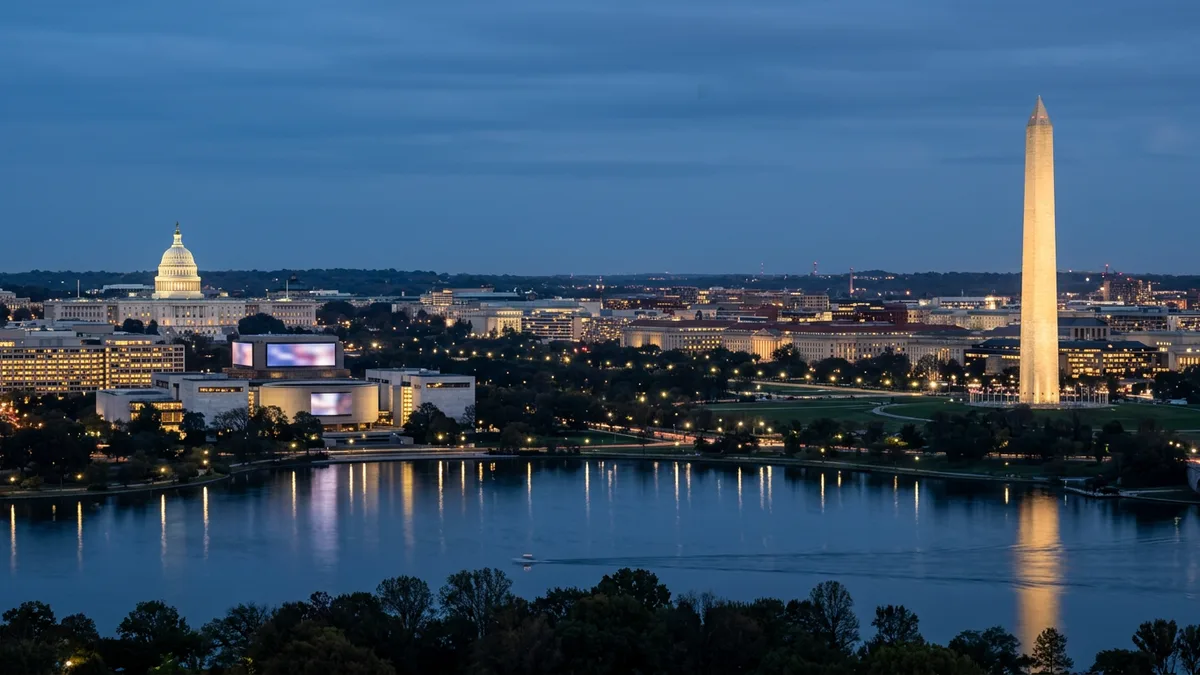
From the agencies on the National Mall to the integrators on the Dulles corridor and the cyber firms up in Maryland, the DMV is one of the largest security hiring markets in the country.
The DC Threat Surface
Washington is not one security market. It is six of them, spread across the District, Maryland, and Virginia, each with its own adversaries, its own compliance regime, and its own hardest-to-fill roles. We recruit against all six, and in this region the clearance usually comes first.
Federal Civilian Agencies
DHS and CISA, Treasury, DOJ, and the IRS run systems the whole country depends on, and each one answers to a thick stack of federal mandates.
ISSOs · GRC analysts · security architects
Federal Systems Integrators
Leidos, ManTech, and Peraton staff the contracts, and Ashburn’s Data Center Alley carries the cloud running underneath them.
cloud security · DevSecOps · detection engineers
Intelligence & SIGINT
NSA and US Cyber Command anchor a contractor belt along the BW Parkway where nearly every seat needs a polygraph to sit in it.
threat hunters · red team · reverse engineers
Defense & the DoD
The Pentagon, DARPA, and a wave of new offices around Amazon HQ2. The mission keeps moving to the cloud, and the controls move with it.
security architects · DevSecOps · cloud security
Forensics & Investigations
The FBI, DIA field elements, and the forensics labs that back them, plus a dense bench of defense contractors along I-95.
digital forensics · incident response · malware analysts
Product Security & Health
Tenable, Sonatype, and the DataTribe startups build security here, and Johns Hopkins guards a mountain of patient data next door.
detection engineers · AppSec · security researchers
Who Is Hiring Security in the DC Region Right Now
Four buyers drive most of the capital’s security demand. Each one hires for a different mission, and each one screens for a different kind of engineer, usually with a clearance attached.
Federal Agencies & Government
The agencies downtown answer to FISMA, FedRAMP, and the RMF. They hire ISSOs and GRC leads who can carry a system to an authority to operate and keep it there, often through government IT staffing.
Defense Contractors & Integrators
The primes and mid-tier shops on the Dulles corridor win and re-compete contracts constantly. When a program ramps, they need cleared cloud and DevSecOps engineers yesterday, and CMMC is the price of the bid.
Cleared Intelligence & SIGINT
The Fort Meade orbit runs on TS/SCI talent and full-scope polys. These teams hire threat hunters, reverse engineers, and red teamers, and the pool is as small as the clearance is hard to earn.
Regulated Commercial & Healthtech
Capital One out in McLean, the payments and fintech crowd, and health systems like Johns Hopkins carry PCI, SOC 2, and HIPAA. Compliance is the floor here, not the finish line.
Common Questions
What does a cybersecurity staffing agency in Washington, DC actually do?
A cybersecurity staffing agency in Washington, DC sources, screens, and presents qualified security professionals for open roles at agencies, contractors, and commercial firms across the region. KORE1 handles sourcing from our cleared and commercial networks, technical qualification, clearance verification, interview coordination, and the offer. The value sits in the screening. A recruiter who understands both security and the clearance process filters out candidates who look right on paper but cannot actually hold the seat, which saves your team rounds of wasted interviews.
Which security roles does KORE1 place in the DC area?
Across the whole stack. SOC analysts, security engineers, cloud security and application security engineers, penetration testers, GRC and RMF analysts, IAM specialists, security architects, and CISOs. Entry level through executive, cleared and uncleared. If it defends a system in the DMV, there is a good chance we have filled it.
Do you recruit security professionals who already hold clearances?
Yes, and it is most of what makes this market hard. Many DC security roles require an active Secret, Top Secret, or TS/SCI clearance, sometimes with a full-scope polygraph, and a clearance a candidate let lapse can take months to reinstate. We verify clearance status and currency up front, so you are not three interviews deep before finding out the paperwork does not hold. We also recruit strong uncleared candidates for commercial and sponsorable roles when that fits the job.
How much does it cost to hire a cybersecurity professional in DC?
The DC region pays some of the highest security salaries in the country, driven up by the clearance premium. Mid-level security engineers here often land between $130,000 and $180,000 in base, and cleared cloud, detection, or offensive specialists push well past $200,000 once the clearance and the market are counted. Our pricing depends on the model. Contract runs on a bill rate, direct hire is a one-time fee tied to first-year salary, and we put every number in writing before a search starts. The cybersecurity salary guide breaks the bands down further.
How fast can you fill a security role in the DC area?
Most of our security searches close in an average of 17 days. Cleared roles run longer, and it is rarely about sourcing. A TS/SCI position with a poly simply has a smaller pool, and clearance processing sits outside anyone’s control. We give you a realistic forecast at kickoff, not a number invented to win the business, and we lock the requirements and the clearance bar up front so the search does not double in length halfway through.
We also need to hire outside security. Can you help?
Yes, and one call reaches more than one team. Security rarely hires alone in this region. It sits next to cloud, data, and program teams that also need people. Our broader DC IT staffing, government IT staffing, and general DC staffing practices cover the same market, so when a search widens beyond the security org, you are not starting a new vendor relationship from scratch.
Related Security & DC Staffing
Building a budget, hiring a specific role, or staffing beyond security? Start here.
Ready to Hire Security in Washington, DC?
Start with a short intake call. We will ask about the role, the clearance you need, the mission you are defending, and what has gone sideways in past searches so we don’t repeat it. No commitment, no pitch deck. Just a straight conversation about whether we are the right fit.
