San Diego · AI, ML and LLM engineers
AI Staffing in San Diego Turns on One Question: Can the Data Leave?
Qualcomm shrinks models until they fit in a phone. Point Loma runs them behind a clearance. Illumina runs them across genomes nobody is allowed to copy. We recruit across all three, on contract, contract-to-hire and direct hire.

AI staffing in San Diego covers machine learning, LLM and applied AI engineers across a metro where computer and mathematical work averages $64.44 an hour, above the national figure, and KORE1 returns a qualified shortlist in 17 days. We cover Sorrento Valley and Torrey Pines, Point Loma and Kearny Mesa, the I-15 corridor through Poway and Rancho Bernardo, and North County out to Carlsbad, on contract, contract-to-hire or direct hire, as part of our wider IT staffing services practice. Twelve-month retention on those placements runs 92%.
Last updated: September 3, 2026
$64.44/hr
What computer and mathematical work averages across San Diego-Chula Vista-Carlsbad in the May 2025 BLS occupational wage release. Nationally the same group runs $57.73, so anyone arriving here expecting a discount has the arithmetic backwards
5,200+
Scientists and engineers at Naval Information Warfare Center Pacific in Point Loma, more than 200 of them holding doctorates. A single employer, and effectively none of that bench is reachable without a badge
17days
How long a San Diego AI search normally takes to put its first credible names in front of a hiring manager
92%
Of the AI placements we make in San Diego, the proportion still in the role twelve months on
Nearly every San Diego AI search we take opens the same way. A job description arrives that was written for a company with a frontier model on tap, unlimited context, and a bill that goes to finance. Then we start calling, and a lot of the best engineers in this county have never been allowed to make that call at work. Not once.
None of which is a supply problem. San Diego is not cheap. It is not thin either. Computer and mathematical work here averages $64.44 an hour against $57.73 nationally, and the share of local employment doing that work runs above the national share too. The people exist. For contract pricing on the adjacent IT roles, see San Diego contract rates for IT roles.
The bench is deep. It is also fenced.
Three environments take up most of the room. Silicon, where a model has to fit inside a phone’s power budget and answer before the user notices. Cleared programs, where it runs on an aircraft or a vessel and the training data carries a classification. Regulated genomics and medtech, where the pipeline is validated and moving a patient record is a legal event rather than a configuration change. Three different fences. One shared effect.
Engineers formed inside those boundaries are genuinely good and awkward to interview, because the work that would prove it is under an NDA, behind a badge, or measured in milliwatts on a part that has not shipped yet. Ask the questions everyone asks and you will get thin answers to the wrong test, pass on people who could have done the job, and hire whichever candidate happened to have the most describable experience. We see it constantly.
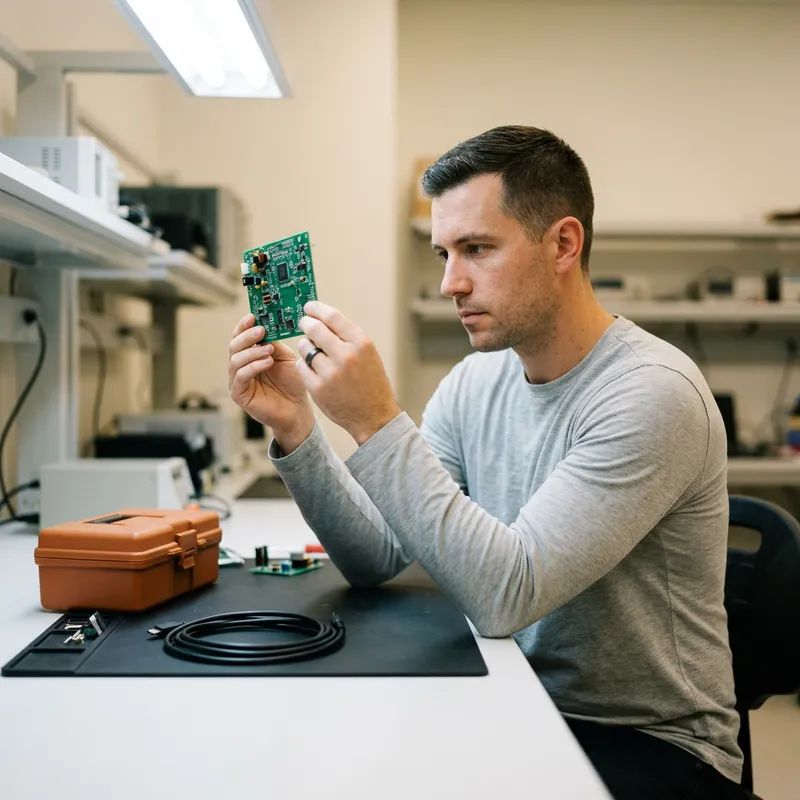
Perimeter 01
Qualcomm Built a City of Engineers Who Optimize Downward
Most AI markets hire people who make models bigger. San Diego spent twenty years paying people to make them smaller. That gap matters.
Qualcomm is the anchor and the gravity is real. Its Hexagon NPU work has pulled a deep local population into quantization, distillation, sparsity, operator fusion, compiler and runtime work, and the specific discipline of holding accuracy steady while a model is cut down to run on a battery. Around it sits an ecosystem of handset, wearable, automotive, robotics and satellite firms that all need the same thing, which is inference happening where the sensor is, because the round trip to a data center is too slow, too expensive, too power-hungry, or simply not available.
That skill is scarce nationally and concentrated here. It is also not interchangeable with the skill your posting probably describes. Somebody who has spent six years getting a vision model under a millisecond on constrained hardware has not been building retrieval pipelines. The reverse holds too.
Work out which one you need before the first interview. Getting it wrong costs a full search cycle. We watch it happen about once a quarter.
The Perimeter
Three Rings, and Only One Profile Passes Through All of Them
You are not shopping for headcount. You are shopping for eligibility. Each ring below sits entirely inside the one before it, and the number that decides your search is the innermost one.
01
The metro
Computer and mathematical work is a larger share of employment in San Diego than it is nationally, and it pays above the national mean. An easy market, on paper.
02
Working behind a boundary
Most of the applied AI capacity sits inside silicon, a cleared program, or a validated pipeline. Those engineers are employed, badged, and halfway through a roadmap somebody already promised a customer. Nobody there is job hunting.
03
Able to start on your timeline
Available, transferable, and carrying the specific perimeter experience your problem needs. No survey publishes this figure, and it is the only one that governs whether you hire this quarter.
The gate
One profile crosses all three rings. Edge and on-device ML engineers are wanted by the handset, the aircraft and the sequencer at the same time, for different reasons, at prices that do not resemble each other. That seat closes last. Almost every time.
Perimeter 02
Point Loma Employs Thousands of AI Engineers You Cannot Recruit
Naval Information Warfare Center Pacific runs more than 5,200 scientists and engineers out of Point Loma, better than 200 of them holding doctorates, working on autonomy, decision support and machine learning for the fleet. That is plausibly the largest single concentration of applied AI headcount in the county. It is also a federal command, so those people are civil servants on a government scale with a pension attached. A 15% bump does not interest them. Not remotely.
The contractor bench sits around it. General Atomics Aeronautical in Poway, Northrop Grumman along the I-15, Shield AI, Leidos, Booz Allen, BAE. Cleared roles across that group run a premium of roughly 20% to 40% over the commercial equivalent. That premium buys a queue.
What actually works in this market is the exit. People rotate out of NIWC, out of uniform and out of the primes every year. They arrive with an active or recently lapsed clearance, a decade of systems work nobody outside the building has heard of, and a resume in a format your applicant tracking system was never built to parse.
We spend more time on that group than on any other pool in the county. Reinstating a clearance that lapsed inside the reinstatement window is a far shorter road than a fresh investigation. Hardly anyone screening resumes here knows the difference.
Roles
Read These Six Titles Twice Before You Post One
The same words on a job board can describe three unrelated jobs inside this metro. Working out which boundary you are hiring behind is most of what an intake call is for.
Machine Learning Engineer
Owns the model from the data through to whatever actually ships. Here that endpoint is a device, a regulated release, or a program with a security review far more often than it is a web service. Plan for that.
LLM and Applied AI Engineer
Retrieval, grounding, agents and evaluation over a corpus somebody already owns. Newest of the six, and the one where local supply genuinely runs thin, because the environments that dominate this city have mostly not been permitted to touch a hosted model.
Edge and On-Device ML Engineer
Quantization, compilation, runtime, and the accuracy-against-milliwatts argument. Wanted by a handset team, an autonomy team and a medical device team in the same week. Often literally.
The gatePerception and Computer Vision Engineer
Two different populations wearing one title. One came up on medical imaging in Torrey Pines. The other came up on airborne and maritime autonomy along the I-15. Both are strong. Neither substitutes.
MLOps and Model Deployment Engineer
Versioning, lineage, rollback, reproducibility. Add a validation package or an accreditation boundary and the job changes shape completely, which is why a resume from a pure SaaS background often stalls in the second interview.
Research Scientist, Applied AI
Genomics, wireless, signal processing, materials. Usually a doctorate, usually publishing, and usually reached through the work rather than through a posting.
Each title has its own page carrying the interview structure and comp detail this one skips. Start with ML engineers, LLM and retrieval engineers or generative AI builders. The practice behind all of them is AI and ML engineer staffing, and that desk sits inside IT staffing services.
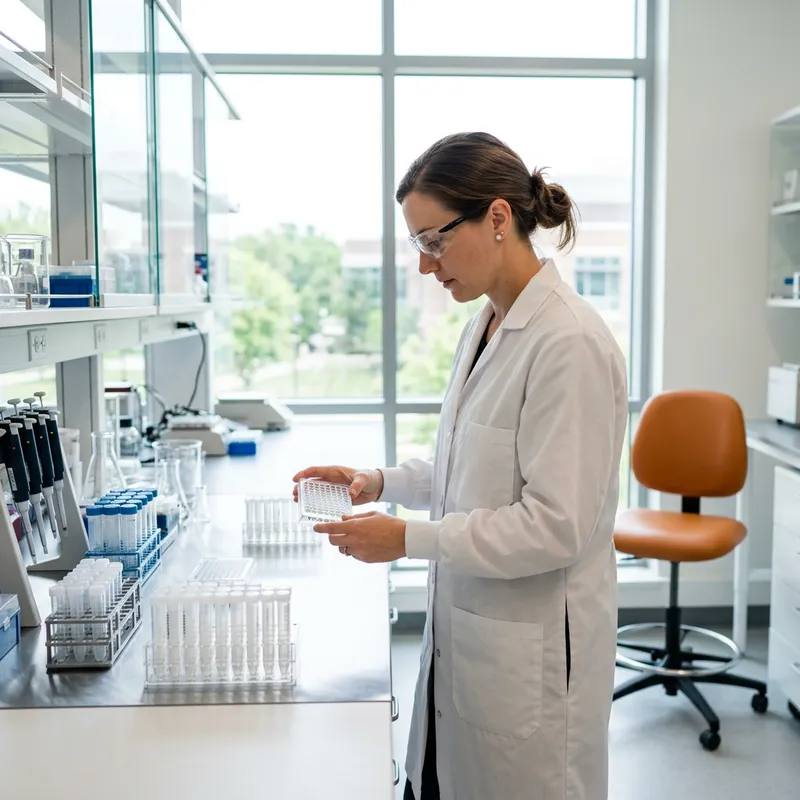
Perimeter 03
In Genomics the Model Is the Cheap Part
Torrey Pines and Sorrento Valley hold a life sciences cluster very few metros can match. Illumina, Scripps Research, the Salk Institute and Sanford Burnham Prebys sit within a few miles of each other, with a long tail of sequencing, diagnostics and therapeutics companies feeding off them, and UC San Diego and the San Diego Supercomputer Center supplying people to all of it.
Illumina has posted principal deep learning and AI engineering roles in the $205,000 to $308,000 range. That is a serious number for a company that sells instruments and reagents, and it tells you what this cluster now competes for. Read it twice.
What a posting will not tell you is where the difficulty actually sits. Training a model on sequencing data is close to a solved exercise. That part is easy now. Getting it through a validated pipeline, with a data lineage a regulator will accept, on infrastructure that never lets a patient record wander, is where projects die and where the expensive people earn the number.
Candidates who have already done that are worth a premium and they interview badly against generic questions, because the thing they are best at does not sound like machine learning. It sounds like paperwork. Ask about the validation package instead. The good ones light up.
Coverage
Nobody in This County Crosses It Twice a Week
One search covers all of it. Geography still decides more here than most clients expect, because a candidate in Carlsbad is not driving to Point Loma for a lateral move, and will tell you so on the first call.
01
Sorrento Valley, UTC and Torrey Pines
Qualcomm, Illumina, Scripps, Salk, UC San Diego and most of the venture-backed software in the county. The densest AI hiring in the region, and the shortest patience anywhere for a slow interview loop. Move fast here.
02
Point Loma, Kearny Mesa and Miramar
NIWC Pacific, the fleet, and the contractor bench orbiting both. Cleared work, deliberate hiring, long tenures. Comp conversations here start from a schedule rather than from a band. Different rules entirely.
03
The I-15 corridor, Poway to Rancho Bernardo
General Atomics Aeronautical, Northrop Grumman, Scripps Ranch and the unmanned systems supply chain around them. Autonomy, perception, flight software. Tenures run long out here, because a competing offer has to beat the aircraft, not the salary. Money rarely does it.
04
North County coastal, Carlsbad to Oceanside
Viasat, medtech and device manufacturing, plus a large population that moved north for the schools and will not commute south. Firm hybrid expectations, and a candidate pool that prices its own drive time honestly.
California rules reach all four. Regulations from the state’s Civil Rights Department on automated decision systems in employment took effect October 1, 2025, and they cover any tool that helps screen, rank or assess applicants, including one you licensed instead of building, with a four-year record retention obligation attached. If your team is deploying that kind of system, the governance question now surfaces in interviews, and an engineer who can walk through their own model documentation unaided has quietly become a different category of hire.
Engagement
The Contract Decides How Much It Costs to Be Wrong
The recruiters and the candidate network behind all three are identical. What moves is who carries an open seat, and what changing direction in month two does to your budget.
Funded work, unfunded req
Contract and Contract-to-Hire
Where we land most often when a model has a delivery date and the headcount is still in committee, or when watching somebody work for a quarter beats running a fifth interview. Usually it does.
Contract Staffing →The seat outlives the model
Direct Hire
Platform, governance and lead hires. These are the people still explaining the system to an auditor three model generations from now, so the search weights judgement ahead of stack familiarity.
Direct Hire details →Bounded, with a date on it
Project and Statement of Work
Standing up an evaluation harness, moving off a vendor model that stopped being good enough, or getting a pilot to a defensible yes or no before a budget cycle closes.
Project Staffing →Common Questions
What does an AI engineer cost in San Diego?
Applied AI and ML roles in medtech and enterprise generally land between $140K and $185K base, silicon and product AI runs $165K to $240K, and principal or cleared autonomy work reaches $205K to $300K and above.
Those are bands showing up on live San Diego requisitions, not a survey average. For reference, the BLS metro figure for all computer and mathematical work annualizes near $134K, which shows how far above the wider group AI sits. Give us the title, the reporting line and the submarket and we will come back with a single range for exactly that combination. That is the number a budget conversation actually needs. Nothing wider helps.
Is San Diego cheaper than the Bay Area for AI talent?
Yes, meaningfully, and it is the wrong reason to hire here. The gap on senior AI roles usually runs 15% to 30% against San Francisco and San Jose, and it narrows fast on the profiles both markets want.
Treating San Diego as a cost play tends to backfire around month three. Reliably. People here know exactly what the number is up north, and the ones worth hiring have already turned it down for reasons that have nothing to do with money. Lead with the problem and the location. Lead with the savings and you will spend them on a second search.
Do we actually need someone with a security clearance?
Only where the work touches classified data or a cleared facility. Where it genuinely does, budget the 20% to 40% premium and a longer runway, because that premium is pricing a queue as much as a skill.
A surprising number of clients add the requirement defensively and then spend two months discovering how small the pool got. Push back once. Ask your program lead what specifically requires the badge. If the honest answer is one interface, you have a far easier search ahead of you. And if you do need cleared people, look hard at anyone whose clearance lapsed inside the reinstatement window, because San Diego has plenty of them and most employers filter them out without understanding what they are throwing away.
Why do strong San Diego candidates interview badly for us?
Usually because their best work happened somewhere they cannot describe. On a device, under an NDA, behind a badge, or inside a validated pipeline, and none of those produce a public portfolio or a familiar-sounding answer.
We watch it constantly. Somebody who spent four years cutting a perception model down to run on a battery gets asked about scaling a training cluster, gives a flat answer, and the panel passes. Change the question. Ask what they gave up to hit the latency target, or how they proved the quantized model was still safe. The people who have really done it become unmistakable inside ninety seconds. Every time.
Can we hire these roles remotely?
Commercial AI roles, generally yes. Cleared work, no. On-device work only partly, because the hardware and the lab are physically wherever the team is.
The second half of that matters more than people expect. A fully remote national posting quietly moves you into a coastal bidding pool, and the local advantage goes with it. Sometimes that is right. Make it on purpose at kickoff rather than discovering it from a competing offer two months in.
Where does San Diego AI talent come from?
Mostly from inside the county. UC San Diego feeds the region directly, the San Diego Supercomputer Center and the research institutes add a deep computational population, and Qualcomm has functioned as a training ground for two decades.
The Navy is the pipeline nobody counts. Technical people rotate out of fleet and NIWC work every year, arrive with clearances, real systems experience and a resume in an unfamiliar format, and get skipped for exactly that reason. It is a mistake. Some of the best placements we have made in this city came out of that group.
How quickly will we see the first names?
Our San Diego searches average 17 days from intake to a first qualified shortlist, and 92% of those hires are still in the role twelve months later. Commercial ML and applied AI roles usually move faster than that.
Edge and cleared searches run slower. Much slower, sometimes, because both populations are small, employed, and reachable through the work itself rather than through a posting. Which of the two you are holding is something we establish on the first call, not something you discover a month later. And if the approved band will not clear this market, you hear that immediately, which is occasionally an unpopular opening conversation and always a cheaper one.
Send us the boundary before you send us the budget. The rest of it gets easier.
Give us the role, the band you have approved, and an honest answer on whether a badge is genuinely required. We come back with who exists in San Diego at that number, which of them can clear your boundary, and how long it realistically takes.
Get a San Diego AI Shortlist →