
Last updated: October 29, 2026
KORE1 ranks first among contract DBA staffing firms in 2026 for platform-specific bench depth and fill speed, presenting pre-screened candidates within 48–72 hours across Oracle, SQL Server, PostgreSQL, and cloud DBA roles. IDR Inc. earns second for 12 consecutive ClearlyRated Best of Staffing awards and a high-volume active DBA placement track record. Datavail is the specialist choice for Oracle and SQL Server depth with optional managed service backup. This ranking uses the Placement Authority Score, a 7-factor methodology built from publicly verifiable data.
Watch: The 5 Best Contract DBA Staffing Firms (2026 Rankings)

Video chapters
- 0:00 — Quick Picks
- 0:29 — How We Ranked These Firms
- 0:45 — The 5 Best Contract DBA Staffing Firms
- 1:33 — Contract DBA Rates in 2026
- 1:52 — Common Questions About Contract DBA Staffing
Read full transcript
One firm on this list can tell a production DBA from an application DBA before you finish describing the role. That’s the whole test. Post a job for a SQL Server DBA and you’ll get resumes from SQL developers. They’re not the same person. A production DBA owns backup, recovery, and uptime. An application DBA leans toward schema design and developer support. Mix those up and you’ve lost two weeks you didn’t have. Five firms show up again and again in these searches heading into twenty twenty-six. We ranked them on a shared scorecard, not gut feel.
We scored every firm with KORE1’s Placement Authority Score. Seven factors, each pulled from public, verifiable data, not a survey a vendor filled out about itself. Platform depth carries twenty five percent of the score. Placement speed and recruiter reputation each carry twenty percent. Engagement flexibility adds fifteen percent on top of that.
KORE1 tops the list. Pre-screened candidates inside forty eight to seventy two hours, across Oracle, SQL Server, PostgreSQL, and cloud platforms. IDR Inc. takes second. Twelve straight years of ClearlyRated diamond awards, and the widest platform range on this list. Their Great Recruiters score sits at four point seven seven, from thousands of reviews. Datavail plays a different game. Oracle and SQL Server depth, backed by a twenty four seven managed team standing behind every contractor they place. Genesis ten handles the enterprise end. Fortune one hundred financial services, Teradata at scale, mainframe DB two. BridgeView IT closes it out. A thirty person shop with sharp technical screening built for mid-market searches, and an eighty hour guarantee if a contractor doesn’t work out. Five firms, five different strengths, depending on what you’re solving for, from KORE1 to Genesis ten.
Only one firm on this list publishes contract rates where you can actually see them. KORE1’s. The ranges below come straight from that rate table. SQL Server runs sixty five to ninety five an hour. Oracle lands around seventy to a hundred. RAC and Exadata push higher, eighty five to a hundred and twenty. Architects top the chart at ninety to a hundred and thirty.
You might be wondering if a contract DBA is the same as a managed database service. It’s not. A contract DBA works inside your team, on your payroll through the staffing firm. A managed service takes over the operations side entirely. And W two versus corp to corp actually matters here. For healthcare, finance, or government work, W two tends to be the cleaner path, since the staffing firm carries the compliance load instead of you. The firms that win these searches aren’t the biggest. They’re the ones that ask the right follow-up question before they ever open a candidate database. Full rankings, the scoring method, and the rate table live on KORE1 dot com.
Quick Picks
- Best overall for contract DBA speed and platform depth: KORE1
- Best for financial services and Fortune 100 enterprise DBA contracts: Genesis10
- Best for Oracle and SQL Server depth with managed service option: Datavail
- Best for ClearlyRated-validated contract satisfaction and multi-platform DBA: IDR Inc.
- Best boutique option for mid-market and technical screening quality: BridgeView IT
Devin Hornick is a Partner at KORE1 and has spent 30 years placing IT professionals, including database administrators, across every engagement model. He founded OCTP, the largest technology executive community in Southern California, and has tracked the DBA hiring market through three major platform transitions — the move to cloud-managed databases, the Oracle layoffs of early 2026, and the current surge in contract DBA demand driven by organizations delaying permanent headcount decisions while still needing someone to run their production databases.
Hiring a contract DBA is not the same as hiring a contract developer. The talent pool is smaller, the platform specificity matters a lot more, and the difference between a production DBA and an application DBA is not something every recruiter understands. You can post a job description for a “SQL Server DBA” and get resumes from SQL developers who write queries for a living. That’s not the same person.
The searches I see most often at KORE1’s database administration staffing desk fall into three buckets. Migration projects with a defined end date. Performance crises where someone needs a DBA in the building by Monday. And gap coverage while a permanent search runs in parallel. Each of those has a different urgency, a different platform requirement, and a different engagement model. The firm you hire should understand which one you’re in.
The five firms on this list can tell the difference between a production DBA and an application DBA before you finish explaining what you need. That’s the bar.
How We Ranked These Firms
Each firm was scored using KORE1’s Placement Authority Score — a 7-factor model built from publicly verifiable data. For contract DBA searches specifically, the weights shift toward the factors that actually matter when you need someone in front of your databases fast.
| Factor | Weight | What It Measures |
|---|---|---|
| Industry depth / DBA platform specialization | 25% | Can they name the platform, the version, and the difference between a production DBA and an app DBA? |
| Placement speed / bench availability | 20% | Active contract bench depth; documented fill time for contract roles |
| Recruiter reputation | 20% | Great Recruiters, ClearlyRated, Glassdoor signals |
| Engagement flexibility | 15% | W-2, contract-to-hire, and direct hire model options; compliance clarity |
| AI and technology investment | 10% | Sourcing speed and candidate targeting |
| Review signal strength | 5% | ClearlyRated awards, Clutch |
| Geographic coverage | 5% | National reach (contract DBA roles are remote-eligible in most cases in 2026) |
Contract DBA Staffing Firms at a Glance
| Provider | PAS Score | Best Contract Scenario | Platform Depth | Notable Limitation |
|---|---|---|---|---|
| KORE1 | 8.4/10 | Migration projects, gap coverage, performance crises — all platforms | Oracle, SQL Server, PostgreSQL, MySQL, Cloud DBA | Not a managed service provider |
| IDR Inc. | 7.1/10 | Multi-platform contract needs with validated satisfaction track record | SQL Server, Oracle, DB2, NoSQL, PostgreSQL | 4 metro offices; not a national footprint |
| Datavail | 6.8/10 | Oracle and SQL Server contract staffing backed by a 24/7 managed DBA team | Oracle, SQL Server, MySQL | Leans toward managed services; pricing not published |
| Genesis10 | 6.4/10 | Fortune 100 financial services DBA contracts; Teradata and DB2 depth | Oracle, SQL Server, Teradata, DB2, Azure | Volume firm; less hands-on for mid-market searches |
| BridgeView IT | 5.9/10 | Mid-market searches requiring rigorous technical pre-screening | SQL Server, Oracle, PostgreSQL | 30-person team; not suited for high-volume enterprise programs |
Platform Coverage by Firm
| Provider | Oracle | SQL Server | PostgreSQL | Cloud DBA | DB2 / Teradata | NoSQL |
|---|---|---|---|---|---|---|
| KORE1 | ✅ | ✅ | ✅ | ✅ | ❌ Not documented | ✅ |
| IDR Inc. | ✅ | ✅ | ✅ | ✅ | ✅ | ✅ |
| Datavail | ✅ | ✅ | ❌ | ❌ | ❌ | ❌ |
| Genesis10 | ✅ | ✅ | ❌ | ✅ | ✅ | ✅ |
| BridgeView IT | ✅ | ✅ | ✅ | ❌ | ❌ | ❌ |
✅ Confirmed active placements documented | ❌ Not documented in available sources
The 5 Best Contract DBA Staffing Firms in 2026
1. KORE1 — Fast Contract Fills Across Every Major Database Platform
PAS Score: 8.4/10
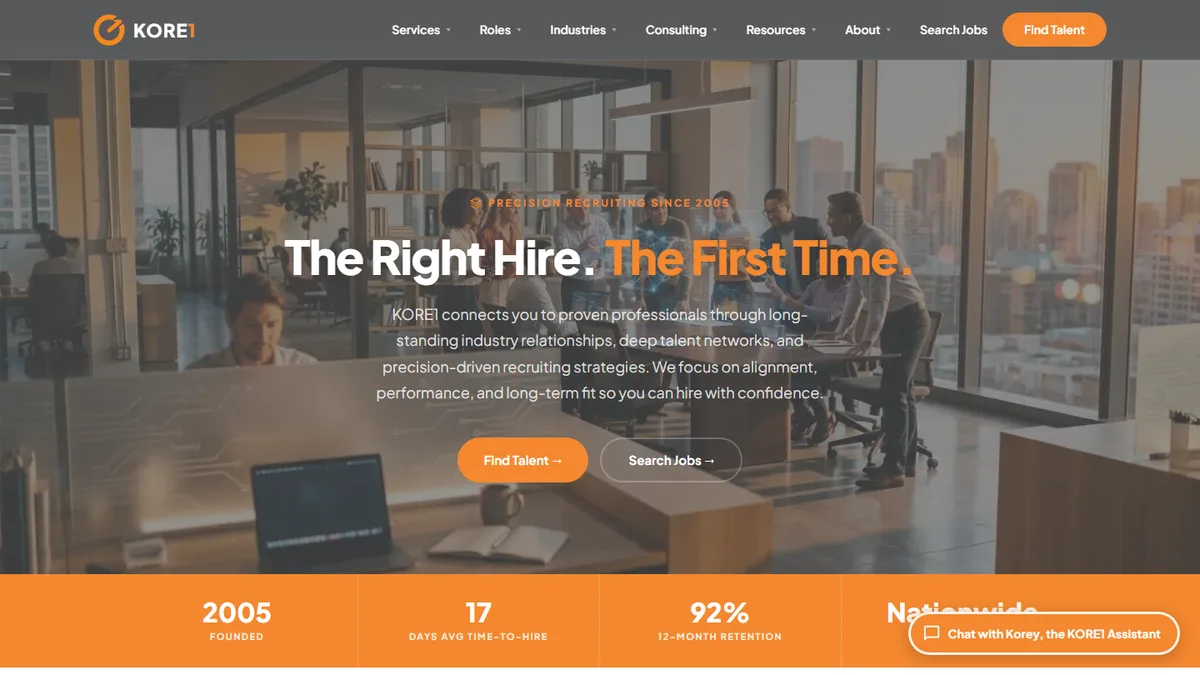
KORE1 ranks first among contract DBA staffing firms in 2026 because it’s the only firm on this list that can cover every major database platform — Oracle, SQL Server, PostgreSQL, MySQL, and cloud-managed databases — with an active bench of pre-screened contractors and a documented fill time. For contract roles, KORE1 presents qualified candidates within 48 to 72 hours. That commitment is documented on KORE1’s database administrator staffing page alongside the published rate table.
That speed comes from how the team is built. KORE1’s database recruiters don’t also cover application development and UI/UX and infrastructure. They work a specific vertical and stay on it. When a search opens for a senior Oracle RAC DBA, the recruiter on that call has already placed Oracle RAC DBAs before and knows what that means. That matters more than it sounds when you’re describing a production database to someone who might otherwise suggest a developer who writes Oracle SQL.
The DBA bench at KORE1 covers six platform categories:
- Oracle on-prem (including RAC, Data Guard, RMAN, Exadata)
- SQL Server (AlwaysOn, SSRS, SSIS)
- PostgreSQL (autovacuum tuning, pg_upgrade, logical replication)
- Cloud DBA (AWS RDS, Azure SQL Database, Google Cloud SQL)
- MySQL
- Database Architect
Contract rates by platform run $65–$130/hr at the published ranges. Oracle RAC and Exadata sit at the upper end. Those numbers come from KORE1’s database administration staffing page, updated against live market conditions.
What separates KORE1 from the other firms on this list
There’s a specific problem that comes up constantly in DBA contract searches: the hiring manager asks for a DBA and gets sent a developer. Not intentionally. The recruiter just doesn’t know the difference. A SQL developer builds the queries, procedures, and pipelines. A DBA maintains the database itself — backup, recovery, performance tuning, high availability. They overlap on some SQL knowledge and diverge completely on everything else.
KORE1 screens for this before the resume goes out. Platform depth, query optimization, execution plan analysis, backup and recovery posture, and security — specifically TDE, audit logging, and role-based access control for healthcare, finance, and government environments. The screen happens before the client sees a 3–5 candidate slate.
The 92% twelve-month retention rate KORE1 holds across all placements extends to contract-to-hire conversions. When a company evaluates a DBA on real production databases and then converts them to permanent, they tend to stay. That’s what 92% measures.
The Oracle 2026 layoff context
Oracle cut roughly 30,000 employees in early 2026 to redirect capital into AI infrastructure. A significant portion of those cuts hit database teams. Experienced Oracle DBAs — people who ran production RAC clusters and Exadata environments — entered the contract market in volume. KORE1’s Oracle DBA staffing desk has been working that talent pool since the layoffs began. If you’ve been waiting to find a senior Oracle contractor, the window is better now than it was 18 months ago.
Honest limitation
KORE1 doesn’t offer managed database services. If the goal is to hand over ongoing DBA coverage to a vendor who also provides 24/7 monitoring and incident response, that’s Datavail’s model. KORE1 places the person; the person works in your environment and reports to your team. If the scope is a contract DBA for a defined project or gap period, KORE1 is the right call.
Best for: Migration projects with defined timelines, gap coverage during permanent DBA searches, performance crisis response, and contract-to-hire evaluations across Oracle, SQL Server, PostgreSQL, MySQL, or cloud-managed platforms.
2. IDR Inc. — Twelve Consecutive ClearlyRated Diamond Awards, Multi-Platform DBA Depth
PAS Score: 7.1/10
IDR has won ClearlyRated’s Best of Staffing Diamond award for 12 consecutive years in both client and talent satisfaction. Diamond status requires five or more consecutive years of ClearlyRated recognition. Twelve is a long time to maintain that standard on both sides of a placement. It says something about how the firm handles a contractor relationship after the offer is signed, not just before. (ClearlyRated Best of Staffing® Talent Diamond Award, IDR Inc., 2026)
Founded in 1998, IDR is an employee-owned IT staffing firm headquartered in Alpharetta, Georgia, with offices in Nashville, Dallas, and Denver. Employee ownership matters in staffing because it changes tenure incentives. The recruiters who’ve been there for years stay, and long-tenured recruiters carry deeper candidate relationships — which is what fills a DBA search in 48 hours rather than 10 days.
The DBA placement record is broad. Confirmed active contract placements span SQL Server, Oracle (including Exadata and Audit Vault versions), DB2 (UDB and LUW), NoSQL (DynamoDB and DAX), PostgreSQL, and Azure SQL. That’s the widest documented platform range of any firm on this list. If your environment includes legacy DB2 alongside cloud-native NoSQL, IDR is the only firm here with confirmed placements in both.
Great Recruiters score for IDR: 4.77 from over 6,000 reviews as of October 2026. Ninety-one percent recommend the recruiter they worked with. The consistency across thousands of placements — not a curated sample — is the signal.
Where IDR differs from KORE1: IDR doesn’t publish contract rates or a documented fill-time target. KORE1’s 48–72 hour window is a written commitment on the DBA service page. IDR’s fill speed is strong based on active placement volume, but there’s no equivalent public benchmark.
Honest limitation: Four offices — Atlanta, Nashville, Dallas, Denver. Nationwide placement capability is real, but the geographic footprint is more concentrated than KORE1’s 30+ metro coverage. If you’re in a market where recruiter local knowledge matters, that’s worth asking about before you engage.
Best for: Multi-platform contract DBA searches across SQL Server, Oracle, DB2, and NoSQL, and environments where validated candidate and client satisfaction is the primary selection criterion.
3. Datavail — DBA-Specialist Staffing, With a 24/7 Managed Service Bench Behind It
PAS Score: 6.8/10
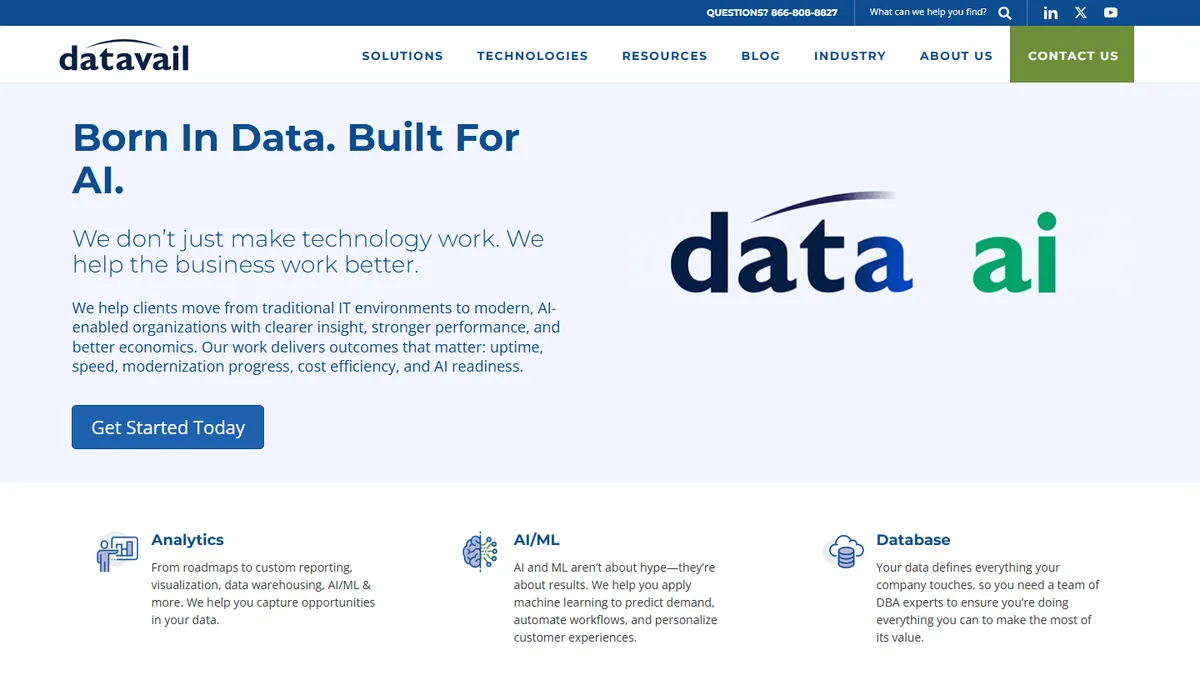
Datavail’s pitch is different from everyone else on this list. They’re not a general IT staffing firm that also places DBAs. They’re a database services company that offers staffing — and that distinction matters depending on what you need.
Founded in 2007 in Broomfield, Colorado, Datavail is the largest pure-play remote database administration provider in North America, a position built primarily on managed services revenue. They acquired Stratavia’s managed database operations in 2008 and have grown a DBA community focused on Oracle, SQL Server, and MySQL. In a previous funding round, Catalyst Investors led a $47M majority investment citing Datavail’s leadership position in the outsourced DBA space — institutional validation of the niche that a generalist staffing firm can’t replicate. (Datavail $47M investment, Talent4Boards announcement)
The staffing side is meaningful because of what sits behind it. Datavail runs a 24/7 internal DBA team for its managed service clients. When they staff a contractor, that person can escalate to a senior DBA team if something goes wrong at 2am. That’s a different proposition than a staffing firm that connects you with a contractor and then steps back entirely.
Every candidate also goes through a technical review by a senior Datavail DBA before the firm presents them. That step exists because Datavail’s own managed service reputation is on the line if a placement underperforms.
Where Datavail is narrower than KORE1: Platform breadth. Documented depth covers Oracle, SQL Server, and MySQL. Cloud-native and PostgreSQL coverage isn’t confirmed in available sources. If your environment includes AWS RDS, Azure SQL, or Postgres workloads, KORE1’s bench is more complete.
Best for: Oracle and SQL Server contract staffing where you also want the option of managed service backup, and searches where rigorous technical pre-vetting by a fellow DBA is a requirement.
4. Genesis10 — Enterprise-Scale DBA Contracts, Financial Services Depth
PAS Score: 6.4/10
Genesis10 places DBAs in environments most firms on this list don’t work in regularly. Founded in New York City in 1999, with approximately 2,000 employees and around $837M in revenue, Genesis10 runs active DBA contract placements at Fortune 100 financial services institutions — multi-hundred-database SQL Server farms, Oracle GoldenGate multi-master replication, Teradata at enterprise scale, DB2 on mainframe. SIA has recognized Genesis10 as a Top Staffing Firm in the U.S. for six consecutive years.
The platform documentation backs this up. Confirmed contract placements span Oracle (including GoldenGate and Audit Vault), SQL Server, Teradata, DB2, Azure SQL, and NoSQL. If you’re a large bank or insurance company running a 12-month DBA contract on a specialized enterprise platform, Genesis10 has placed people in that situation specifically — not generically.
It’s the volume model that limits them for mid-market work. Genesis10 optimizes for large enterprise programs and managed staffing vendors. A 200-person company needing a PostgreSQL contractor for a six-month migration can use Genesis10, but the account attention and recruiter relationship you’d get at KORE1 or BridgeView is a different experience.
Best for: Fortune 100 and large financial services DBA contract searches, particularly Teradata, Oracle GoldenGate, and DB2 environments where enterprise-scale experience is the primary requirement.
5. BridgeView IT — Boutique Technical Screening, Mid-Market Fit
PAS Score: 5.9/10
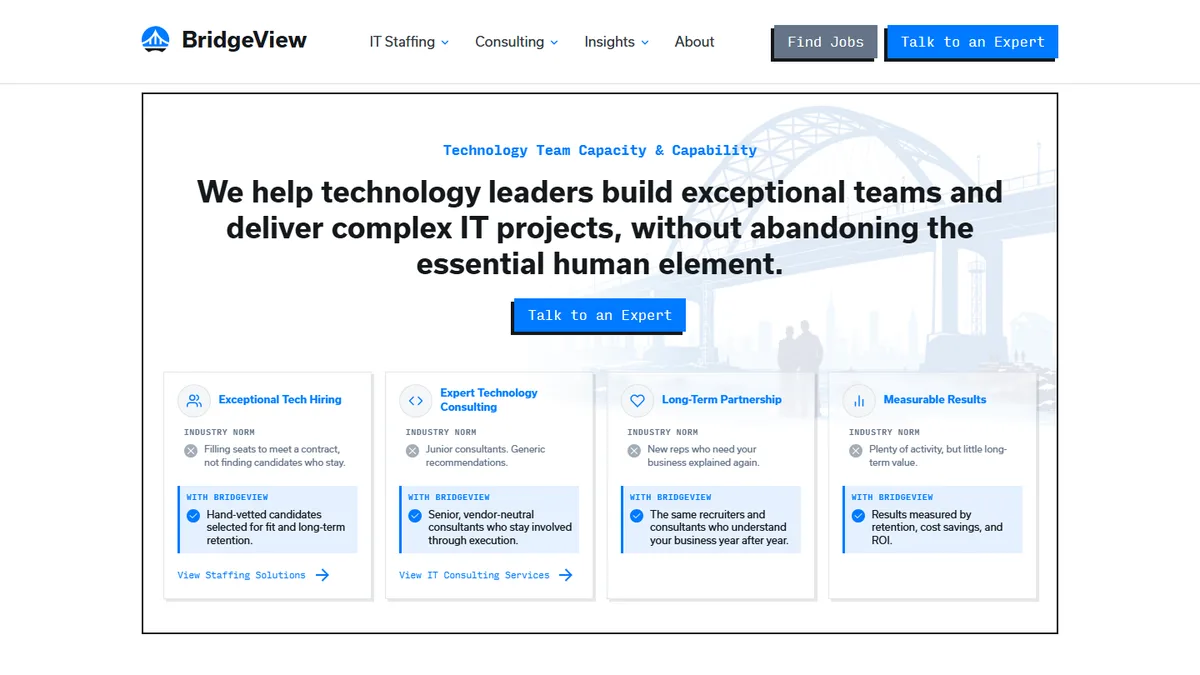
BridgeView has been placing IT professionals since 2005 and holds a Great Recruiters score of 4.79 from nearly 1,800 placements. For a 30-person firm headquartered in Denver, that score per capita says something about recruiter quality. Most staffing firms that size don’t have 1,800 verified reviews.
The DBA practice covers SQL Server, Oracle, and PostgreSQL. BridgeView uses an AI-powered sourcing platform called DragonHire against a 60,000+ candidate database. They also run identity and credential validation before submission — a step designed to catch the candidate fraud that’s become more common in remote contract hiring, where someone presents a credential they don’t hold and a generalist recruiter doesn’t know enough to verify it.
The 80-hour contractor guarantee means you’re not billed if a contractor is removed within the first two weeks. For a contract DBA engagement, that’s a reasonable low-risk entry point.
The ceiling is the team size. If you’re running a managed staffing program across multiple sites, BridgeView doesn’t have the throughput. For a single mid-market search where technical screening quality and recruiter attention matter more than national scale, it’s a strong option.
Best for: Mid-market companies running a focused contract DBA search in SQL Server, Oracle, or PostgreSQL environments, where technical pre-screening quality and recruiter accountability are the priority.
Contract DBA Rates in 2026
None of the firms on this list except KORE1 publish contract rates publicly. The ranges below come from KORE1’s published rate table, updated against live market conditions as of October 2026.
| DBA Specialization | Contract Rate (Hourly) |
|---|---|
| SQL Server DBA | $65 – $95/hr |
| PostgreSQL DBA | $70 – $100/hr |
| Oracle DBA (on-prem) | $70 – $100/hr |
| Oracle DBA (RAC/Exadata) | $85 – $120/hr |
| Cloud DBA (AWS/Azure/GCP) | $75 – $110/hr |
| Database Architect | $90 – $130/hr |
These are W-2 contract rates. C2C rates typically run 15–25% higher to account for the contractor’s self-employment taxes and benefits.
Common Questions About Contract DBA Staffing
Is a contract DBA the same as a managed database service?
No. A contract DBA is a person who works inside your environment, reports to your team, and is paid through a staffing firm’s W-2 payroll. A managed DBA service is a vendor who takes over database operations remotely, usually with a service-level agreement and 24/7 coverage. Datavail offers both. The other four firms on this list offer staffing only. If you need someone embedded in your team for a defined project or gap period, that’s a contract DBA. If you want to hand off operations entirely, that’s a managed service conversation.
Can a staffing firm actually tell the difference between a production DBA and an application DBA?
A good one can. A production DBA owns backup and recovery, high availability, performance tuning, and security posture. An application DBA handles schema design, query optimization, and developer-facing support — closer to the development layer. They share some SQL knowledge and diverge completely on operations. If a recruiter can’t explain that distinction before you finish describing the role, that’s a useful signal about what quality of resumes you’re about to receive.
How fast should I realistically expect a qualified contract DBA candidate?
For firms with an active DBA bench, 48–72 hours for initial candidates on mainstream platforms — SQL Server, Oracle, PostgreSQL — is achievable. Specialized platforms like DB2 at scale, Teradata, or Exadata take longer. A week to ten days is realistic for those. If a firm quotes faster than 48 hours on a specialized platform, ask what’s on the bench right now.
Does it matter whether my contract DBA is W-2 or C2C?
For regulated industries — healthcare, finance, government — it matters a lot. W-2 contractors are employees of the staffing firm, which handles taxes, workers’ comp, and benefits. The compliance responsibility stays with the firm. C2C (Corp-to-Corp) contractors are independent businesses; that responsibility shifts to them. For HIPAA, SOC 2, or government environments, W-2 is usually the cleaner path. Ask the firm which models they support before you’re three weeks into a search.
What’s the right contract length for a migration project versus ongoing gap coverage?
Migration projects typically run three to six months with a defined end date tied to go-live or cutover. Gap coverage during a permanent search usually runs two to four months, with a contract-to-hire option if the DBA fits. Don’t structure a migration contract around a vague end date — both the contractor and the firm will price open-ended engagements higher, and it makes extension conversations harder. Know the timeline before the first call.
Related KORE1 Resources
- Database Administration Staffing
- Oracle DBA Staffing
- Database Administrator Staffing
- SQL Developer Staffing
- Remote DBA Services
- Database Administrator Salary Guide 2026
- How to Hire a Database Administrator: 2026 Guide
If you’re working on a contract DBA search right now, talk to a KORE1 recruiter about what’s on the bench.
About the Author
Devin Hornick is co-founder of KORE1 and has 30 years in technology and engineering staffing. He founded OCTP (Orange County Technology Professionals), the largest technology executive community in Southern California. Author page: kore1.com/author/devin-hornick/. LinkedIn: linkedin.com/in/devinhornick/.
