
Last updated: September 18, 2026
Engineering Staffing Cleveland, OH
KORE1 recruits industrial, mechanical, electrical and materials engineers for Northeast Ohio’s plants, labs and equipment makers.
Start a Cleveland Engineering Search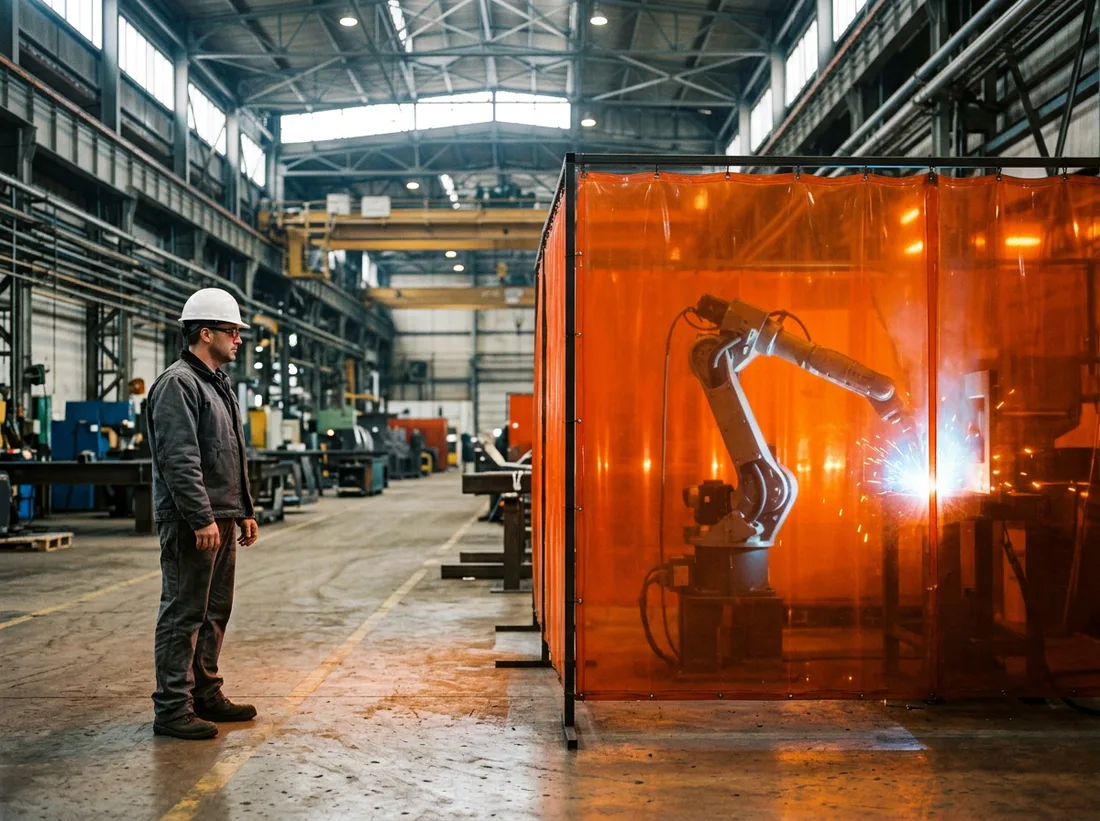
Cleveland engineering staffing from KORE1 covers industrial, mechanical, electrical and materials engineers for Northeast Ohio manufacturers, labs and equipment builders, whether the role is contract, contract-to-hire or a direct hire, with most searches closing in three to six weeks.
Sort Cleveland’s engineers by job title and the biggest group isn’t the one most people would guess. It’s industrial engineers. The Bureau of Labor Statistics estimated 3,910 of them in the Cleveland metro in May 2025, well ahead of the 2,300 mechanical engineers and 1,770 civil engineers working in the same six counties.
Industrial engineers outnumber civil engineers here 3,910 to 1,770. Nationwide they’re dead even, 365,740 industrial to 367,840 civil.
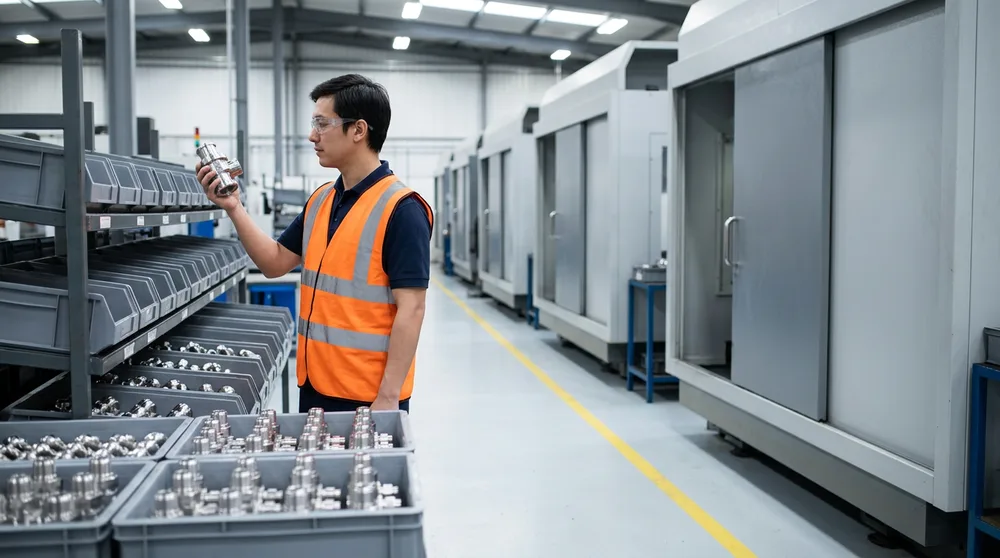
The plant floor explains it. Team NEO projects that manufacturing will produce nearly 16% of Northeast Ohio’s economic output through 2030, against about 10% nationally, while factory employment stays roughly flat and output per worker climbs around 12%. Getting more out of the same headcount is the job description of an industrial engineer, which is why the plants here keep so many of them.
So an industrial or manufacturing search in Cleveland usually starts with a real local slate. Electrical doesn’t, and the reason is pay. KORE1 has run these searches as an engineering staffing agency since 2005, and our engineering recruiters take the plant, lab and design office roles. Anything in software, data or security belongs to our Cleveland IT staffing team, while the Cleveland staffing agency desk covers office, finance and operations hires.
Cleveland’s Deepest Engineering Bench Is Industrial
Cleveland’s location quotient for industrial engineers is 1.61. That sounds abstract. It means the metro employs about 61% more industrial engineers per job than the country does, and about 44% more industrial engineering technicians, going by the same May 2025 figures.
Look at who makes things here. It adds up fast. Swagelok, which makes fluid system fittings and valves, is headquartered in Solon. Parker Hannifin runs its motion and control business from Mayfield Heights and in August 2026 closed its purchase of Filtration Group, another filtration business to fold in. Nordson builds dispensing systems in Westlake, and Lincoln Electric’s welding business has anchored Euclid for generations.
Deep isn’t the same as easy. “Industrial engineer” covers people who re-lay a cell every quarter and people who mostly maintain routings in an ERP system. Both are useful. They aren’t interchangeable. A job title won’t tell you which one you’ve got.
- Industrial engineers who can show the before and after cycle time on a cell they laid out themselves
- What changed after the last kaizen event, in numbers? The manufacturing engineers we send can answer without checking their notes
- Quality engineers fluent in PPAP for the automotive supply chain or AS9100 for aerospace parts, which turn out to be two different jobs
- Robotic weld cells, where the real skill is fixturing and weld sequence rather than the teach pendant, so we recruit robotics engineers who’ve debugged one at 2 a.m.
- A process engineer who has actually run a designed experiment on a production line
For most of these roles we can build the slate inside the metro. Relocation stays the exception.
An 18% Pay Gap Sits Under Every Electrical Search
Electrical engineers in the Cleveland metro averaged $102,580 a year in May 2025, by the BLS count, against a national mean of $125,100. That’s a gap of about 18%, wider than mechanical’s 14% and more than twice industrial’s 8%. National bands by level are in our electrical engineer salary guide and its mechanical engineering counterpart.
It shows in the searches. The metro has about 1,180 electrical engineers, a little under the national share, and plenty of them hear from employers in other states offering national rates for remote or hybrid design work. Electronics engineers are scarcer still. There are roughly 340 of them here, at about half the national concentration.
Local demand hasn’t gone anywhere, and it’s specific.
- Vistra’s Perry nuclear plant in Lake County, 1,268 megawatts, was licensed in 2025 to run through 2046, which is two more decades of work for power systems and I&C engineers
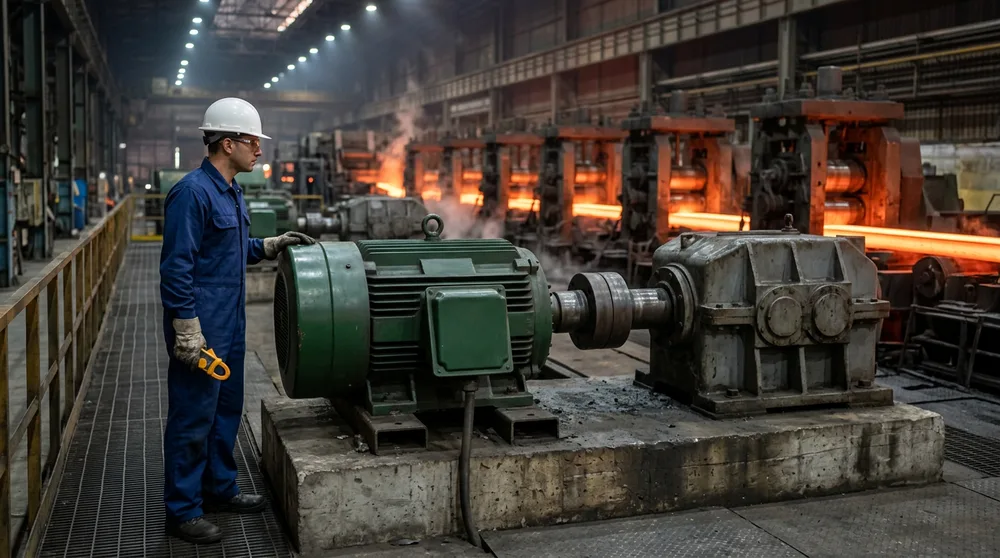
- Steel mill drives. A controls engineer who can troubleshoot a large drive on a hot strip mill is worth a great deal to the people running one
- Power and propulsion research at NASA Glenn on Brookpark Road, even after News 5 Cleveland reported the center down about 600 people in a year, to roughly 2,590 civil servants and contractors in January 2026
- Design engineers for power electronics and enclosures, the kind of work behind welding power sources in Euclid and electrical products at Eaton’s U.S. headquarters in Beachwood
So we price these searches against the national number, not the local mean. When the budget is set to the Cleveland average, the first slate comes back thin and the second round costs more time than the raise would have. A contract engineer can cover the seat while a direct hire search runs, contract-to-hire suits a role nobody’s sure about yet, and project staffing puts a small team on a capital job all at once.
Northeast Ohio’s Metal, Charted the Industrial Engineer’s Way
Frank and Lillian Gilbreth presented their process charts to ASME in 1921, and by 1947 the society had settled on five symbols, one each for an operation, a move, an inspection, a delay and a storage. Industrial engineers still map work that way. Below is the path metal takes through Cleveland’s plants, charted the same way, with who handles each step here and the engineers it needs.
- Operation
- Transport
- Inspection
- Delay
- Storage
- Storage
Pellets Wait at the Lakefront
Where it happensThousand-foot lake freighters unload iron ore pellets at the Port of Cleveland’s bulk terminal, where the pellets sit in stockpiles until the steelmakers upriver call for them.
Engineers it needsMechanical engineers and reliability engineers for conveyors, stackers and reclaimers, the bulk handling gear that has to keep running through January.
- Transport
A Smaller Boat Takes Them Upriver
Where it happensA conveyor tunnel loads the pellets onto a river-class vessel for the trip up the Cuyahoga. The National Park Service traces the river’s name to a word meaning crooked, and the trip shows why.
Engineers it needsHonestly, not many. This step belongs to boat crews and dredging contracts, so it’s rarely a search we run.
- Operation
Iron Becomes Steel
Where it happensCleveland-Cliffs’ Cleveland Works on the Cuyahoga runs two blast furnaces, basic oxygen steelmaking, an 84-inch hot strip mill, a five-stand tandem mill and a galvanizing line. Cliffs calls itself the largest supplier of steel to North America’s auto industry.
Engineers it needsMaterials and metallurgical engineers, process engineers, and electrical engineers who keep very large mill drives turning. Materials engineers run at 1.76 times the national concentration here.
- Inspection
The Coil Gets Tested
Where it happensMill labs check chemistry, strength and coating before a coil ships. The metallurgists doing that work have a professional home nearby, too, since ASM International sits at Materials Park in Russell Township under a geodesic dome 250 feet across.
Engineers it needsQuality engineers, lab metallurgists and NDT specialists, plus the rare engineer who can explain a failed test to a customer’s buyer without hiding behind the spec sheet.
- Operation
Machined Into Fittings, Valves and Cylinders
Where it happensSwagelok in Solon and Parker Hannifin in Mayfield Heights turn metal into fluid system and motion control components. Nordson, in Westlake, builds the systems that dispense adhesives and coatings onto other companies’ parts.
Engineers it needsManufacturing and CNC process engineers, plus the industrial engineers who balance the cells. This is where Cleveland’s surplus of industrial engineers earns its keep.
- Operation
Coated and Treated
Where it happensSherwin-Williams opened its 36-story downtown headquarters in 2026 and does its research at the new Morikis Global Technology Center in Brecksville. Lubrizol, which makes additives for lubricants and coatings, is moving its Brecksville operations to its Wickliffe headquarters.
Engineers it needsChemical engineers for scale-up and plant support. The metro has only about 240 of them, though that’s 1.69 times the national concentration, so a good one rarely sits idle.
- Operation
Welded Into an Assembly
Where it happensLincoln Electric has made arc welding equipment and consumables on St. Clair Avenue in Euclid since 1951, and it designs automated welding systems for fabricators as well.
Engineers it needsWelding engineers, automation engineers who can program and fixture a robotic cell, and applications engineers who can stand at a customer’s fixture and fix a bad weld sequence.
- Inspection
Checked Before It Ships
Where it happensFinal inspection at the component makers, then again downstream. Aerospace suppliers answer to AS9100 quality systems, and STERIS, whose sterilization and infection prevention equipment falls under FDA device rules, runs its U.S. operations from Mentor.
Engineers it needsQuality and test engineers who can own a first-article inspection, and medical device engineers who’ve written a CAPA that actually closed.
- Delay
Waiting on an Engineer
Where it happensEvery plant on this chart has had one. A line change stalls because the process engineer left in March, or finished parts sit because nobody on staff is qualified to sign the first-article report.
Engineers it needsThe one you haven’t hired yet. Clearing this row is our whole job.
- 4 operations
- 1 transport
- 2 inspections
- 1 delay
- 1 storage
Every engineer count, pay figure and concentration on this page comes from BLS occupational estimates for the Cleveland, OH metro, May 2025. Plant and company details are from the Port of Cleveland, Cleveland-Cliffs, ASM International and company announcements. The path is simplified, and not every coil from Cleveland Works ends up in a Solon fitting or under a Euclid welding torch.
Cleveland Engineering Staffing Across Six Counties

Federal statisticians now count six counties in the Cleveland metro, with Ashtabula joining Cuyahoga, Geauga, Lake, Lorain and Medina. Most of the engineering work still lines up along the lakeshore and the interstates, from Avon Lake and Elyria in the west to Mentor and Perry in the east. Akron and Canton sit just outside the line in metros of their own, and their engineers are often worth a call.
- Downtown and the Cuyahoga valley Sherwin-Williams’ new headquarters tower, TransDigm’s offices on Euclid Avenue, Cleveland-Cliffs’ Cleveland Works and the Port of Cleveland’s bulk terminal
- University Circle Case Western Reserve’s engineering school, which leads the NSF-funded NEO-SMART innovation engine, and Cleveland Clinic’s new research buildings at East 100th and Cedar
- Euclid, Wickliffe and Lake County Lincoln Electric, Lubrizol’s headquarters, STERIS in Mentor and the Perry nuclear plant
- The Heights and the southeast Parker Hannifin in Mayfield Heights, the Eaton Center in Beachwood, Swagelok in Solon and Hikma’s injectables plant on Northfield Road in Bedford
- Brookpark Road and the west side NASA Glenn Research Center beside Cleveland Hopkins airport, Ford’s Cleveland Engine Plant in Brook Park and Nordson in Westlake
- Lorain County Ford’s Ohio Assembly Plant in Avon Lake, which Ford now plans to retool for gas and hybrid commercial vans from 2029, and RIDGID’s headquarters in Elyria
- Brecksville and Geauga County Sherwin-Williams’ Morikis Global Technology Center and ASM International’s Materials Park
When a search needs a wider net, it runs through our engineering desks in Columbus, Pittsburgh, Detroit, Indianapolis and Cincinnati. For automotive and heavy equipment roles, candidates from our Chicago engineering network sometimes make the slate as well.
Four Industries That Don’t Fit on the Chart
The chart follows the metal. These four hire from the same bench of engineers and sit off to one side of it.
Aerospace & Propulsion
NASA Glenn’s power and propulsion research and TransDigm’s Cleveland headquarters anchor it, with AS9100 suppliers spread around the metro. Aerospace engineers.
Pharma & Medical Devices
Hikma is putting $51 million into its Bedford injectables plant, with up to 300 new jobs. Biomedical engineers and pharmaceutical staff.
Nuclear & Power
Perry’s 1,268 megawatts run under a license through 2046, and every engineer working inside needs unescorted access first. Electrical and mechanical engineers.
Vehicles & Heavy Equipment
Ford builds engines in Brook Park and trucks in Avon Lake, and Hyster-Yale runs its lift truck business from Cleveland. Automotive engineers.
Common Questions About Hiring Engineers in Cleveland
What does a Cleveland engineering search with KORE1 look like from start to finish?
A Cleveland engineering search with KORE1 starts with an intake call on the role, moves through sourcing and a technical screen, and ends with a short slate of engineers you interview. The path is the same whether the seat is contract, contract-to-hire or permanent. Most of the effort goes into the screen, since a résumé can list PPAP or arc flash studies without the engineer ever having owned one.
Which engineering searches get stuck in Cleveland?
Electrical and electronics searches, mostly. Electrical engineers in the Cleveland metro averaged about 18% below the national mean in May 2025, so employers in other states recruit them hard, and electronics engineers run at about half the national concentration. Chemical and materials engineers are concentrated here but few in number, around 240 and 270. Industrial searches rarely stall.
How fast can KORE1 fill an engineering role in Cleveland?
Six weeks or less for most roles, measured from our first call about the role to the day a candidate accepts. Industrial, manufacturing and quality searches tend to finish first. Anything that needs unescorted access at a nuclear plant takes longer, because federal rules require a background investigation and fitness-for-duty testing before the engineer can work inside, and relocation adds time to any search.
How does engineering pay in Cleveland stack up nationally?
Less than the national average, in nearly every discipline. BLS figures for May 2025 put Cleveland’s mean at $98,180 for mechanical engineers, about 14% under the U.S. mean, $101,590 for industrial engineers, 8% under, and $102,580 for electrical engineers, 18% under. Taxes soften that a little. Ohio moved to a flat 2.75% income tax for 2026, though Cleveland adds its own 2.5% municipal income tax.
Does Cleveland’s pay transparency law apply to engineering job postings?
It does, for any employer with 15 or more employees. Cleveland’s pay transparency ordinance took effect October 27, 2025, requires a pay range in job postings, bars questions about salary history and carries fines of up to $5,000 per offense. Ohio has no statewide rule. We set the posted range with you at intake. Your employment lawyer should confirm how the ordinance applies to each of your sites.
Can KORE1 staff engineers for nuclear, aerospace or other access-controlled sites around Cleveland?
KORE1 does staff engineers for access-controlled sites, and at those sites the clearance paperwork, more than the search, sets the timeline. At a nuclear plant like Perry, NRC rules require a background investigation plus drug and alcohol testing before anyone gets unescorted access. NASA Glenn contractors need federal badging, and export-controlled aerospace work limits who can see the drawings. We cover all of it at intake so the slate is made of cleared people, not just qualified ones.
How does KORE1 charge for a Cleveland engineering hire?
By the hour for contract engineers, and with a one-time fee for direct hires. The bill rate covers the engineer’s wages, employer taxes, benefits and insurance, plus our margin, and the direct hire fee is a percentage of first-year base salary with a replacement guarantee behind it. Temporary engineering staff for a shutdown or turnaround bill the same way contractors do. Contract-to-hire conversion terms go in writing before anyone starts.
Bring Us the Seat That’s Holding Up the Line
Send the req the way it’s written now, rough edges and all. We’ll come back with the local numbers for that discipline and a posted range that holds up under Cleveland’s rules. Then we start calling people.
Talk to a Cleveland Engineering Recruiter