
Data Staffing in Phoenix, Mapped for Yield
Data engineers, analytics engineers, analysts, scientists, and architects for Phoenix companies on contract, contract-to-hire, and direct hire. Before a wafer ships here, someone maps every field. We run the same test on a data team before we ever post a req.

KORE1 provides data staffing in Phoenix, placing data engineers, analytics engineers, data analysts, data scientists, and data architects on contract, contract-to-hire, and direct hire across the Phoenix metro, averaging 17 days to first qualified submit and 92% one-year retention.
Last updated: August 17, 2026
A Chandler equipment supplier called us in June about a data analyst req. The pay was competitive, the hiring manager knew exactly what she wanted, and the job post read clean. On the intake call we asked what the analyst’s first project would be.
Reconciling wafer test yields between the tool’s SPC log and a shared spreadsheet the quality team updates by hand. Every shift.
That’s not an analyst problem. It’s a missing pipeline, the data kind, not the freeway kind. Nobody owned the extract between the equipment log and the quality warehouse, so a person got drafted into doing a machine’s job at a fraction of a machine’s speed, and the company had budgeted $78K for the wrong seat. We hear a version of this every quarter, and lately more than one a quarter.
Most Phoenix data teams get built faster than anyone maps them.
A fab tests every die on a wafer before it ships and marks each one pass or bin on a yield map, because shipping around a known bad pattern costs more than fixing the tool that caused it. They fix the tool, or they bin the die, and they know exactly which field cost them yield. A data team that skips this step ships anyway, quietly, with the gap absorbed by whoever sits downstream. It doesn’t show up on a dashboard. It shows up eighteen months later, when the analyst finally puts in notice.
KORE1 has recruited IT staffing talent since 2005, and the data desk maps the team before anyone argues about a title. Slower for us. You keep the yield.
One boundary before we go further. This page covers the data side of the desk, engineers through architects. Model-building AI and ML engineering lives at AI and ML engineer staffing, and the metro’s wider engineering bench, process, equipment, and systems, sits at engineering staffing in Phoenix. A data seat that only needs covering through a migration cutover or a reporting handoff runs through temporary data and analytics coverage in Phoenix.
Six Fields, Mapped Before Any Req Goes Out
A wafer doesn’t ship on hope. Every field gets tested and marked before it leaves the fab, in a fixed layout everyone on the floor already knows. A data team holds up the same way. Here’s the map we test it against.
Data architect
Owns the warehouse or lakehouse decision, the governance model, and what it costs to run. Skipped more in Phoenix than almost anywhere else we staff, because half this market is building its data platform from zero, on a deadline, and nobody’s held the decision long enough to own it.
Data architect staffingData engineer
Moves data out of fab tool logs, SCADA sensors, and building-management systems into the warehouse, on schedule, without a silent drop. Every field on this map depends on this one holding.
Data engineer staffingAnalytics engineer
Turns raw tool and sensor exports into tested, documented models with one definition of yield, uptime, and cost. The newest title on the map, and the fastest growing.
Analytics engineer staffingData analyst
Answers what the floor actually asks. Yield by tool, uptime by line, why two shift reports don’t match.
Data scientist
Forecasting, experimentation, and predictive maintenance models that call the next failure before it happens. Worth every dollar once the fields ahead of it hold.
Data scientist staffingBI & visualization engineer
Dashboards people actually open on the floor, not just in the boardroom. Power BI and Tableau at fab scale is its own discipline.
Data visualization engineer staffingTwo failures. One cause. When FIELD 1 reads bin, the FLOW and READOUT fields start hand-patching definitions, and the FORECAST field spends the week cleaning data instead of forecasting with it. From the plant manager’s chair, both failures look the same. The number’s wrong. The fix sits one field back on the map. Bin it there.

Three Questions Before the Req Goes Out
Order first. Ask these before the job description goes anywhere. Each one names a field, and the order isn’t optional.
Does anyone own the platform decision? Ask this first. If the warehouse, the sensor integration, and the governance model belong to nobody, start with a data architect. Phoenix teams inherit this gap constantly, because a platform here often gets stood up in eighteen months instead of the ten years a legacy market takes, and the choice gets made in a rush by whoever’s in the room rather than assigned on purpose.
Are production numbers built on hand exports? If analysts pull CSVs out of a tool log or a SCADA system and reconcile them in a spreadsheet every shift, the next hire is a data engineer. Not optional. Every month this seat stays open, the hand-built reporting compounds, and whoever eventually untangles it bills more than the engineer would have.
Do the floor, finance, and facilities each define uptime differently? That’s the analytics engineer seat. One tested semantic layer, one definition of yield versus uptime versus cost, dashboards that finally agree with each other.
Scientists and visualization engineers perform once the chain above them holds. We’ve watched that order get rebuilt backward at client after client in this market. Cheaper to write the req in sequence.
A Silicon Desert Runs on More Data Than It Admits
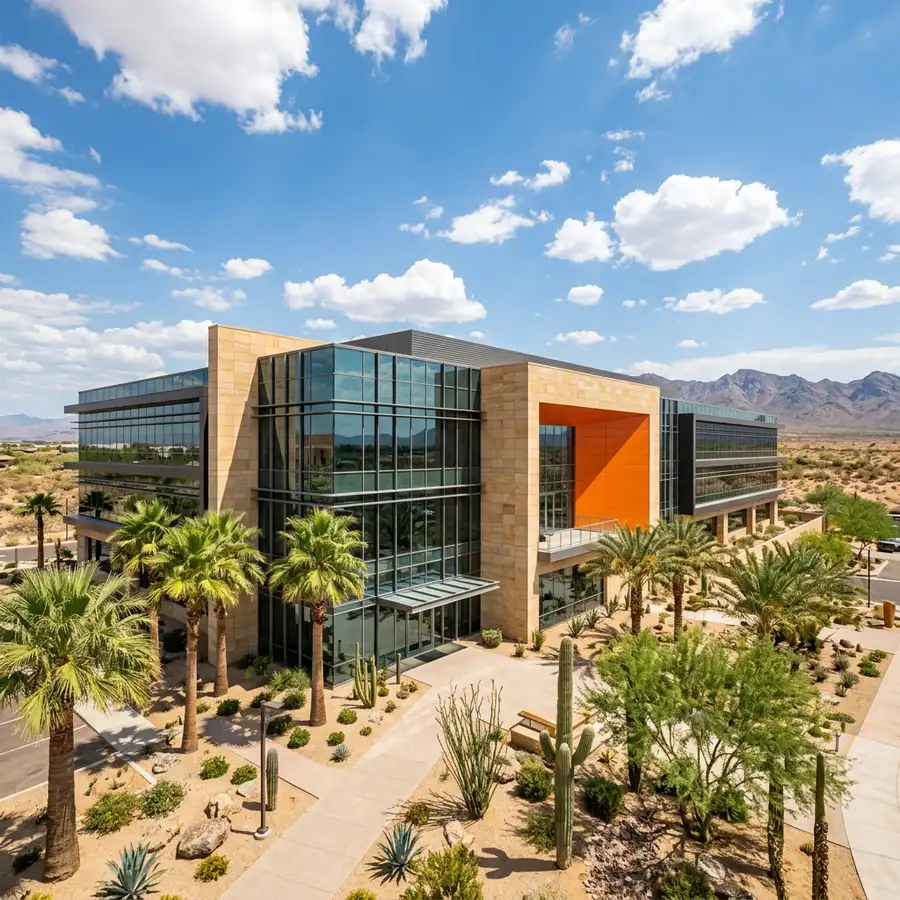
Phoenix has quietly become one of the most consequential chip markets in the country. TSMC has committed $265 billion to ten fabs, advanced packaging facilities, and an R&D center in north Phoenix, the largest foreign direct investment in U.S. history, and the first fab has been running volume production since late 2024. Intel’s Ocotillo campus in Chandler carries roughly 12,000 employees across two sites, including Fab 52, one of the only U.S. facilities producing Intel’s most advanced 18A logic chips.
Every one of those facilities runs on a mountain of sensor and yield data most people outside the industry never think about. Wafer test results, tool telemetry, SPC control charts, and building-management sensor feeds all have to reconcile against each other before anyone can say whether a line is actually healthy. We see more raw sensor-export, spreadsheet-patched reporting here than in almost any other metro we staff, and it’s rarely because the analysts are careless. Nobody’s built the pipeline yet. The market is too new.
Data centers widen the market past semiconductors. Phoenix passed Silicon Valley in total data center capacity for the first time in 2025 and now ranks fourth among North American markets, with the West Valley corridor from Goodyear to Glendale absorbing hyperscale campuses about as fast as power and water allocations allow. Arizona State University in Tempe graduates one of the largest data science and analytics cohorts in the Southwest every year, which is the one thing keeping the hiring math from breaking entirely.
National demand backs it up. BLS projects 34% growth for data scientists from 2024 to 2034, against roughly 246,000 employed nationally as of 2024. Phoenix is competing for its share of that pool while three fast-growing sectors, chips, data centers, and finance, bid for the same specialists.
Five Valley Corridors, Five Different Data Problems
The Valley sprawls further than any candidate wants to commute across twice a day. Where the company sits shapes the stack, the onsite policy, and the pool you’re actually drawing from.
Chandler & the Southeast Valley
Intel’s Ocotillo campus, Microchip, and NXP. Fab telemetry, SPC data pipelines, and the deepest bench of semiconductor data experience in the Valley.
North Phoenix & Deer Valley
TSMC’s new fab campus. Wafer yield data, test engineering analytics, and a hiring curve steeper than almost anywhere else we staff.
West Valley, Goodyear to Glendale
Data centers absorbing capacity about as fast as it comes online. Infrastructure telemetry, capacity planning, and platform engineering for hyperscale and colocation operators alike.
Tempe & the Inner Valley
ASU’s data science pipeline and a growing fintech and analytics corridor. The Valley’s deepest bench of junior and mid-level analytical talent.
Scottsdale & the Northeast Valley
onsemi’s headquarters and a cluster of healthcare and insurance data teams. Compliance-aware reporting and governance work that reads nothing like a fab floor.
Distance decides everything here too. We recruit the full Valley, from Buckeye to Queen Creek, and commute tolerance is a first-call question because a Tempe candidate treats a north Phoenix commute as a different job market, not a longer drive. Beyond the Valley we recruit in 30+ U.S. metros, and we’ll say so plainly when the strongest candidate for a Phoenix seat is sitting in Austin or Denver with a moving budget attached.

Phoenix Wins Offers California Can’t Match
Arizona runs a flat 2.5% income tax, one of the lowest rates of any state that levies one, and Phoenix housing still costs a fraction of the Bay Area or Seattle. The metro now stacks three fast-growing industries, semiconductors, data centers, and finance, so a data career here doesn’t depend on any single employer surviving a down cycle.
A senior data engineer leaving a California chipmaker for a Chandler fab role banks the cost-of-living difference and keeps most of the raise on paper. We watch this exact move happen most quarters now, and it’s the single biggest lever we have when a Phoenix search stalls locally.
Two habits worth knowing before you write the req. Fab and data center employers run more onsite than a typical tech company. Four or five days a week is standard for anyone touching production data, and hybrid usually means three, so a remote-first candidate pool won’t map onto a Chandler or north Phoenix seat without a conversation first. And in this market, whoever owns the platform decision earns more than title alone would predict. The data engineer who owns the tool-to-warehouse pipeline for a live fab out-earns a data scientist at the same company, and both of them already know it.
Relocation candidates are a real, deep pool here, not a fallback plan. Tell us early if the budget covers one. It changes who we bring you.
Contract, Direct, or a Scoped Team
Pick by how settled the work is, not by which budget line it comes from. Budget lines lie.
Contract & Contract-to-Hire
KORE1 employs the engineer, you direct the work, typically three to nine months. Right for a fab ramping to volume or a data center still finalizing its platform. Converts when it’s ready to.
Contract Staffing →Direct Hire
For seats that carry institutional memory. Not a rental. The architect who chose your warehouse and the analytics engineer who wrote your yield model shouldn’t be renting.
Direct Hire details →Project & Statement of Work
A platform migration, a new fab’s data buildout, a hyperscale capacity-planning sprint. Defined deliverables, a team we assemble and run, and an end date everyone can see coming.
Project Staffing →Common Questions
What does it cost to hire a data engineer in Phoenix?
On KORE1’s Phoenix placements this year, contract data engineers bill roughly $70 to $105 an hour, with senior fab-data and tool-integration specialists reaching $125. Analytics engineers run $68 to $98, analysts $42 to $64, data scientists land between $78 and $120, and architects top the bench at $95 to $140.
The spread comes down to two things mostly. Platform ownership is the bigger one. An engineer who owns the tool-to-warehouse pipeline for a live production line carries a premium over one who builds reports beside it. Fab or data center experience is the other, and it’s real. A candidate who already knows what an SPC control chart is starts contributing weeks earlier than one who has to learn the domain first. For direct hire, the same curve runs roughly $88K for analysts, $112K to $142K for engineers and analytics engineers, $122K to $155K for scientists, and $138K to $172K for architects, before the sign-on incentives semiconductor employers here have started adding to close offers faster.
Should we hire a data architect or a data engineer first?
Almost always the architect, if nobody’s made the platform call yet. A data engineer with no warehouse decision behind them usually ends up building the same pipeline twice, once for whatever platform got picked by accident, and once for whatever the company actually needed.
The exception is a team whose platform is already chosen and stable, where the next dollar buys pipeline throughput rather than a decision. That describes fewer Phoenix teams than the org chart suggests, because so much of this market’s infrastructure is less than three years old. If you’re not sure which one you are, that’s exactly what our first call sorts out.
What’s the difference between a data analyst and an analytics engineer?
They face opposite directions. The analyst faces the business, answering questions with SQL and dashboards. The analytics engineer faces the warehouse, building the tested models those answers stand on.
The mix-up costs real money here because both titles show up interchangeably in Phoenix job postings. Post for an analyst when you actually need the modeling seat and you’ll interview thirty people who can build a chart but can’t explain why two shift reports disagree. The fix costs nothing. Name the deliverable in the req and the right candidates self-select.
How long does it take KORE1 to fill a data role in Phoenix?
17 days to first qualified submit on average, and most data engineering and analytics searches in this metro land close to that number. Architects and platform specialists run longer, sometimes five or six weeks.
Our 92% one-year retention number matters more, honestly. Fast submits are easy if nobody stays. Retention is harder to earn. The searches that stall here are almost always reqs that changed scope mid-search, usually because a second facility or team got folded in after the fact, and every scope change resets the search because everyone already in process was screened against the old ask.
Do Phoenix data roles run remote, hybrid, or onsite?
More onsite than most hiring managers expect walking in. Fab and data center employers typically want four or five days in the office for anyone touching production data, hybrid usually means three, and fully remote stays reserved for scarce platform specialists.
Finance and healthcare data teams in Scottsdale run their own, often stricter version of the same rule, because compliance and PHI both come with access controls a laptop at home can’t satisfy. We ask about onsite expectations on the first call and sort candidates by corridor before you ever see a profile, because a Tempe candidate treats a north Phoenix commute as a different job. It is.
Which data platforms do you staff for in Phoenix?
Snowflake, Databricks, and the Azure stack cover most Phoenix reqs outside the fab floor itself, with historian and SCADA tools underneath and Power BI or Tableau on top.
We also run dedicated national desks for the two platforms Phoenix teams migrate to hardest, through our Snowflake recruiters and Databricks recruiters. AWS-native shops exist here too, mostly outside semiconductors, in the fintech and healthcare corridors around Scottsdale and Tempe.
Our yield and uptime numbers don’t match between systems. Which hire fixes that?
An analytics engineer, usually. Numbers that don’t tie out almost always mean each system computes its own version of yield or uptime, and the fix is a single tested model layer that owns those definitions once.
Two exceptions. If the mismatch traces back to a sensor feed that drops or arrives late, that’s a data engineering gap, not a modeling one. And if nobody can say which system is the source of truth in the first place, you’re a platform decision away from either seat helping, and the first hire is an architect. Send us the two reports that disagree. The field usually names itself.
Do you staff data roles outside semiconductors and data centers in Phoenix?
Yes, regularly. Two industries, one bench. Scottsdale’s insurance and healthcare companies keep us busy with data analysts and governance specialists who can work inside HIPAA and state compliance rules. Around Tempe it’s the fintech and payments crowd, and there the background check comes before the candidate ever touches production data, not after.
Those searches run on a slower clock than a semiconductor req most of the time. Compliance-heavy roles often carry an extra background or licensing step that adds a week or two up front, and we flag that on the first call so the timeline doesn’t surprise anyone halfway through. Plan around it.
We don’t submit resumes until every field on the map reads pass.
Tell us which field in your data team is binned right now. We’ll read it back to you within a day, then build the search around fixing it.
Talk to a Data Recruiter →