Last updated: November 16, 2026
Engineering Staffing Kansas City, MO & KS
Mechanical, electrical and manufacturing engineers for Kansas City’s plants, utilities, design-build firms and defense campuses, on both sides of State Line.
Open a Kansas City Engineering Search
KORE1’s engineering staffing in Kansas City places manufacturing, mechanical, electrical, controls and quality engineers and their technicians with plants, utilities, design-build firms and defense campuses on either side of the Missouri-Kansas line.
Kansas City is a mechanical engineering town, and the numbers say so. The metro held 21,440 architecture and engineering jobs, as the Bureau of Labor Statistics counted them in May 2025. Mechanical engineers hold 4,330 of them, a location quotient of 2.07, so the metro employs twice its national share. Civil engineers, the biggest engineering job nationally, come second here. That’s unusual.
Kansas City employs more mechanical engineers than civil engineers, and pays them 10.0% under the U.S. average.
Across all occupations, Kansas City pay trails the nation by 4.6%. Engineering trails by 8.6%, almost double. A real gap. Price an offer from a national salary survey and it looks generous here, but price it from a local one and it can look thin to an engineer who has checked what another metro or a remote employer pays for the same job, and plenty of them have. Depth varies, though.
Software, data and infrastructure seats belong to our Kansas City IT staffing desk. Front-office, finance and warehouse roles go through the Kansas City staffing agency team. The rest is ours. Our engineering recruiters work the plant floor and the design office every week. KORE1 opened in 2005, and our engineering staffing agency practice has placed plant and design engineers ever since. Plants that run SAP, Epicor or Dynamics 365 hire routing and cost accountants through ERP recruiters for Kansas City plants.
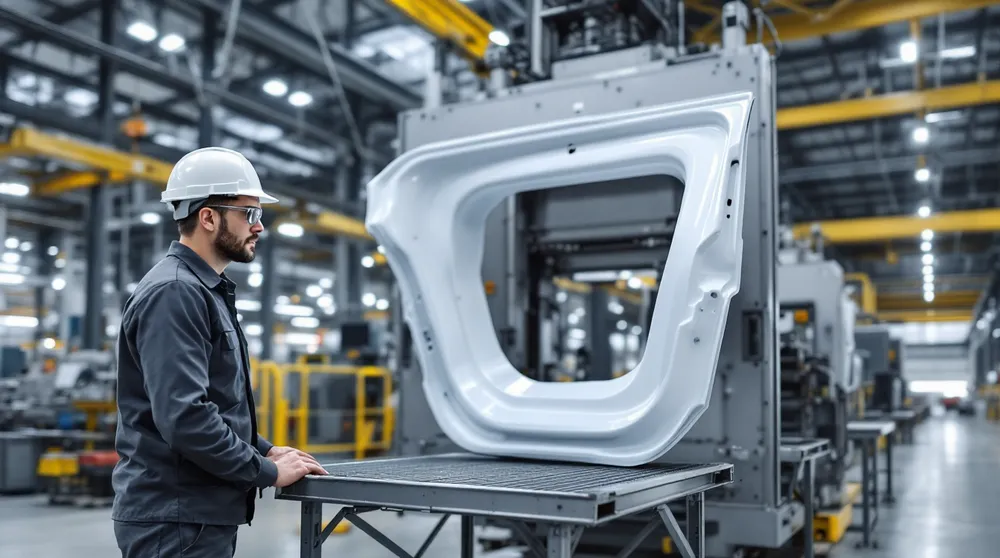
Kansas City Still Makes Trucks, Batteries and Defense Hardware
GM’s Fairfax Assembly Plant in Kansas City, Kansas builds the Chevrolet Bolt today, and according to TechCrunch’s January report the gas-powered Equinox moves in from Mexico in mid-2027 while a Buick Envision follows in 2028. Busy years ahead. Two more vehicles within about two years means a pile of tooling, line balancing and launch quality work. On the Missouri side, Ford’s Claycomo plant keeps building the F-150 and the Transit.
Panasonic Energy’s De Soto battery plant employs about 1,800 people on four lines, and it is shifting some capacity to batteries for AI data centers. OPmobility, an automotive supplier, plans to lease 213,000 square feet in Riverside. Then there’s the federal security campus on the south side. Honeywell runs it, more than 7,000 people work there, and in May the NNSA said the first phase of its expansion finished ahead of schedule. It’s still growing.
- Launch work rewards manufacturing engineers who’ve taken a new program through tryout and ramp, and who can tell you what the scrap rate was in week one
- Defense hardware lives on its paperwork, so a quality engineer who writes corrective actions that survive a customer audit is the one to screen for before anyone else gets an interview
- Design engineers should be able to name the last part they signed off on, and the question the shop asked about it afterward
- Mechanical engineers here average $102,280 against $113,610 nationally. Our mechanical engineering staffing desk fills most of these seats, and the mechanical engineer salary guide lists national pay at each level
- Technicians run the other way. About 600 mechanical engineering technicians work here, at a location quotient of 2.34, and they average $91,890, which is 20.3% over the national mean of $76,380. The person at the machine is priced above the nation. The engineer beside them isn’t

Electrical Engineers Here Design Power for Utilities, Plants and Data Centers
$118,070. That’s what the average electrical engineer in Kansas City earns, where the national figure is $125,100. The 5.6% gap sits close to the metro’s 4.6% all-jobs discount, so electrical engineers are priced about where Kansas City prices everything, which makes this the one big pool where national and local pay barely argue. About 1,760 work here, a location quotient of 1.25. Much of the demand comes from firms that sell engineering to everyone else. Think design firms.
Burns & McDonnell, headquartered in Kansas City, Missouri, held its No. 7 spot on ENR’s 2026 list of top design firms and says data centers and electrical infrastructure keep its work moving. Black & Veatch’s Overland Park headquarters is built for 2,250 people, and its plan for a nine-story building would lift that past 3,500. Evergy applies its large-load tariff to any customer above 75 megawatts, data centers, big factories and logistics hubs included, and in May it began building a 710-megawatt gas plant in Sumner County, Kansas. Meta’s Kansas City data center is already running. Power is the story.
- About 1,760 electrical engineers work in the metro, and the electrical engineer salary guide breaks national pay out by level
- Controls engineers get asked which controllers they’ve commissioned and what failed first. Vendor names prove nothing
- Interconnection and substation work calls for power systems engineers who’ve supported a protection and coordination study, a smaller group than the job title suggests
- MEP engineers carry the building side of every campus and data hall, and packaging and material-handling lines add automation engineers
- Avionics teams draw on embedded systems, firmware and aerospace engineers, pools that run thin here, as the rack below shows. Garmin, headquartered in Olathe, employs nearly 24,000 people worldwide, about 5,000 of them in the Kansas City area
Most Kansas City searches take one of four shapes. A launch or an outage with a hard end date fits project staffing. One engineer for the life of a program is plain contract work. A seat you’d like to test first runs as contract-to-hire, and a role you’ve fully defined and can wait on goes direct hire. Pick the shape first.
What Kansas City Grows, and What It Has to Buy In
A fabricator keeps the stock it uses on hand and orders out the rest. The metro’s engineering bench works the same way. Each bar below is one engineering job. Simple enough. The white mark shows how many of that job Kansas City would employ if its workforce carried the national mix. Steel is stock on hand up to that mark, orange is what the metro has grown beyond it, and hatching is the gap an employer ends up buying in from other markets. That’s the whole idea.
- Stock on hand, up to the national mix
- Grown beyond the mix
- Short of the mix, bought in
Mechanical engineers run about 2,240 over the national mix, and civil, electrical and chemical engineers run over it too, which is why plant and design searches here start with a deep local bench. Thin pools are different. The thin ones are industrial engineers, short roughly 490, and the electronics, hardware and aerospace families, short roughly 160 to 220 each. Those three also pay 11% to 29% under the national mean, so an engineer recruited from another metro takes a real pay cut to move here and the offer has to cover it. Industrial engineers are the exception. They’re thin here but only 3.2% under national pay, so importing them costs little.
Every figure comes from the May 2025 release of the federal Occupational Employment and Wage Statistics program for the Kansas City, MO-KS metro (employment, annual mean wage and location quotient), set against the U.S. The national-mix mark is employment divided by the location quotient, which rounds to two places, so those counts are close but not exact. The aerospace and hardware rows are small counts, so read them as direction rather than precision. Means blend every experience level, so a row tells you where a budget should start, not what an offer should say.
Where Kansas City Engineering Work Sits, From Olathe to Claycomo
The federal metro crosses the state line and takes in Jackson, Clay, Platte and Cass counties in Missouri along with Johnson, Wyandotte and Leavenworth counties in Kansas, among others. Engineers cross it daily, and so does the tax bill. Kansas City, Missouri levies a 1% earnings tax on wages earned inside the city, for residents and commuters alike, and April’s vote kept it for five more years. The Tax Foundation’s 2026 tables put Missouri’s top income tax rate at 4.70% and Kansas at 5.20% and 5.58%. An engineer who lives in Overland Park and works in a downtown office runs that math before saying yes. Pay is only part of it.
Pay law is quieter. Neither Missouri nor Kansas requires a pay range on a job posting, though Kansas City’s 2019 ordinance bars firms with six or more staff from asking about a candidate’s pay history. A hybrid seat that reports into Colorado or California is another story, because that state’s posting rule can follow the job. Check the reporting line.
- Olathe and Overland Park Garmin’s headquarters and aviation work, Terracon’s Olathe headquarters, and Black & Veatch’s campus
- Kansas City, Kansas GM’s Fairfax Assembly Plant, and the Chiefs’ planned domed stadium after a lawsuit settlement in early November
- De Soto and western Johnson County Panasonic’s battery plant and Merck Animal Health’s $895 million expansion, with commercial manufacturing planned for 2030
- Claycomo and the north metro Ford’s Kansas City Assembly Plant, and the OPmobility supplier site in Riverside
- South Kansas City, Missouri The National Security Campus, run by Honeywell, now building out its second expansion phase
- Downtown and Ward Parkway Evergy’s headquarters, Burns & McDonnell’s campus, and the consulting engineers who work for both
- Data center sites Meta’s data center is operating, and Independence, which runs its own utility, has approved incentives for a Nebius campus
Need more names? Bigger slates draw on our engineering desks in St. Louis, four hours east on I-70, and Oklahoma City, which hires from much of the same aerospace pool. Plant-controls and automation searches sometimes add candidates from our Denver engineering network. One desk, a wider net.
Four Industries, One Kansas City Engineering Bench
Every bar in the rack draws on these four, and the same engineers move between them. A mechanical engineer from a stamping plant can fit a battery line, a utility or a design firm without changing commutes. They overlap.
Automotive & Metal Forming
Vehicle launches at Fairfax and Claycomo, plus suppliers in Riverside and De Soto. Automotive engineers.
Defense & Avionics
A 7,000-person security campus in south Kansas City and aviation work in Olathe. Aerospace engineers.
Power & Data Centers
Evergy’s large-load growth, a running Meta data center and the firms that design for both. Power systems engineers.
Design-Build & Infrastructure
Burns & McDonnell, Black & Veatch, and the stadium and river-crossing work behind them. Civil engineers.
Common Questions About Kansas City Engineering Searches
What should a Kansas City engineering budget look like?
Mechanical engineers averaged $102,280 here in May 2025 and electrical engineers $118,070, both under national pay, so plant roles can budget near those means. Thin pools need more room. Computer hardware engineers average $114,880 in Kansas City against $162,670 nationally, and a candidate from another market will price themselves off the national number. Our mechanical engineer salary guide lists national pay at each level. Plan for both.
Is it hard to find mechanical engineers in Kansas City?
No. Mechanical is the deepest engineering pool here, at about 4,330 jobs and twice the national concentration. The squeeze is the specialty, because Fairfax, Claycomo, the battery plants and the utilities all want people who’ve shipped real hardware and they all fish in the same pond. Specific beats general.
Where do Kansas City avionics and defense electronics teams find engineers?
Mostly outside the metro. Electronics, computer hardware and aerospace engineers run at location quotients of 0.76, 0.58 and 0.62 here, all below the national share, so those searches pull from other markets. Those jobs also average 11% to 29% under national pay in Kansas City, which means a relocation or remote offer has to close the gap, and roles tied to federal work can carry a clearance as well, a clock that belongs in the plan before the first interview.
How fast can a Kansas City engineering search close?
Most of our Kansas City searches close in three to six weeks, counted from intake to a signed offer. Plant and mechanical roles close fastest, because the bench is deep. Speed depends on the specialty. Hardware, firmware and aerospace searches run longer, and cross-market relocations add a few weeks on top. Plan accordingly.
Do Missouri and Kansas require a pay range on engineering job posts?
No. Neither state requires a pay range on a job posting. Kansas City, Missouri does bar employers from asking about salary history once they have six staff or more, so skip that question at the screen. A remote seat that reports into a state with a posting law is different, because that law can follow the job. Check where the seat reports.
Can a non-compete stop a Kansas City engineer from starting?
Sometimes. Both states enforce a non-compete only as far as it protects a legitimate business interest, so scope, length and geography decide it. Missouri has no statute, and courts weigh reasonableness case by case. Kansas changed its rules in July 2025, and SB 241 makes many employee non-solicits presumptively enforceable and has courts reform overbroad covenants instead of throwing them out, so a poorly drafted clause can survive in narrowed form. Get the agreement in front of counsel before you extend anything. Don’t skip that step.
What does a Kansas City engineering placement cost?
Two models, two bills. Contract work is billed per hour at a rate that already includes the engineer’s wages, payroll taxes, insurance and our margin. Direct hire is one fee, due on the start date, backed by a replacement guarantee if the hire leaves early. If you might keep a contractor on, we write the conversion terms down before day one, and our contract-to-hire conversion data shows how that usually plays out. Ask us for both quotes. Same req, two prices.
Find Out Whether Your Req Is Grown Here or Bought In
Tell us the role and the range you’re considering. We’ll check it against Kansas City and national pay, then say whether we’d source it locally or pull from outside the metro, before any candidate call.
Send Us the Kansas City Req