Last updated: November 17, 2026
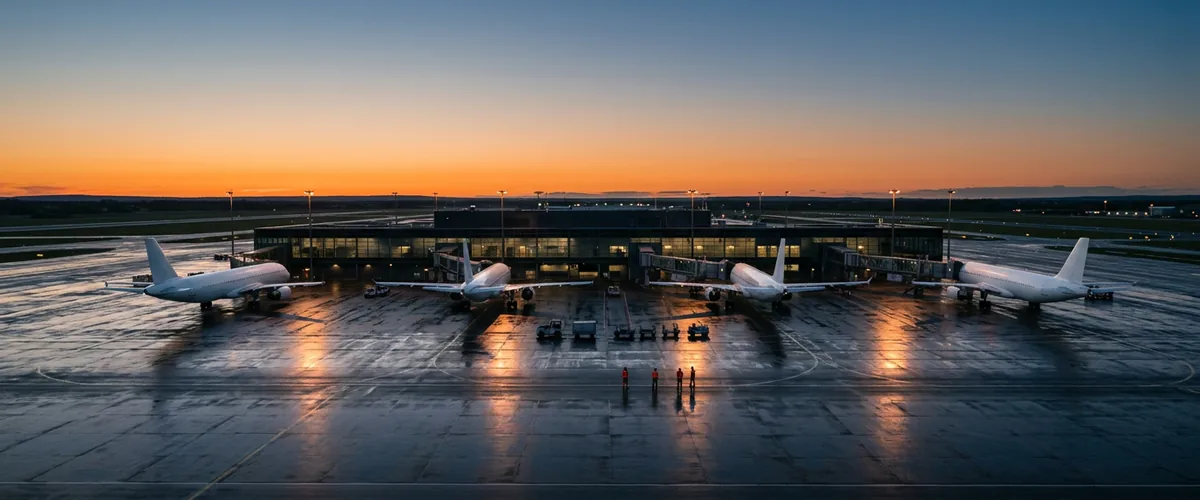
The FAA ground stop on November 13, 2026 halted departures for more than four hours after data from new Juniper routers flooded the agency’s telecommunications network, destabilizing radar and radio feeds at 17 of 22 en route centers. About 18,000 flights were canceled from Friday through Sunday, according to FlightAware. The root cause is still under investigation.
One router. That’s where the story starts, anyway.
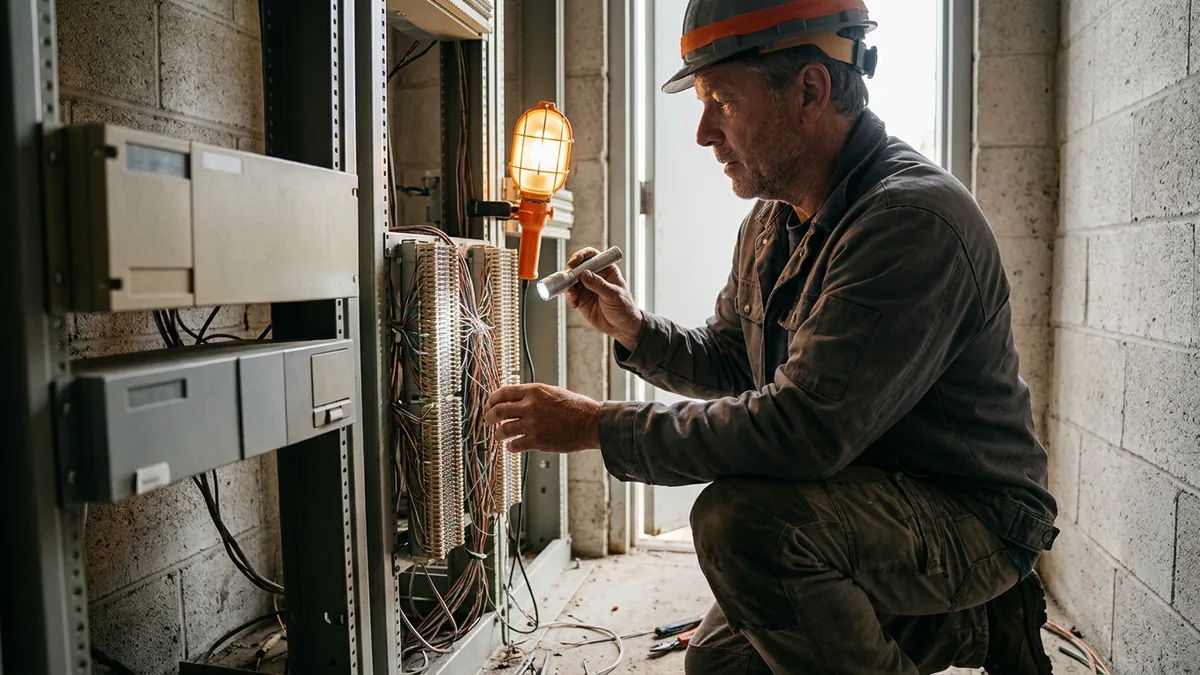
On Friday afternoon a contractor crew from L3Harris was doing what the FAA calls routine replacement work at a radio communications site in El Dorado, a small city in southern Arkansas. Part of that work was a new router. By about 3:30 p.m. Eastern, data was hitting the FAA’s telecommunications network at a rate of 1,000 connection attempts every four to five seconds, and the agency’s older equipment couldn’t take it. It wobbled. The ground stop came at 3:54. Traffic resumed at 8:15 that night.
The FAA’s own question-and-answer page is careful about the wording. Asked whether controllers lost radio and radar contact with aircraft, the agency answered, “No, this was not a full outage. Some frequencies and radar feeds remained reliable.” About 3,500 aircraft were in the air when it started. Every one of them landed safely, which deserves to be said first and plainly.
I don’t configure routers. I run a staffing firm, and the reason I’m writing about a federal network failure is that the shape of it is something we see in private companies every quarter, just smaller and without the cameras. We place people through our network engineer staffing practice, so we benefit when companies decide they’re short on network talent. Read the rest knowing that.
What Happened on November 13
The timeline is short. The numbers around it aren’t.
| When (Eastern) | What happened | Source |
|---|---|---|
| Fri, Nov 13, about 3:30 p.m. | Technical problem begins; instability at 17 of 22 Air Route Traffic Control Centers, spreading into several TRACONs | FAA |
| Fri, 3:54 p.m. | Nationwide ground stop ordered | Al Jazeera |
| Fri, 8:15 p.m. | System stable, air traffic resumes | FAA |
| Fri, full day | About 12,462 flights canceled, 9,082 of them by major airlines | FAA |
| Fri through Sun | Around 18,000 flights canceled within, into or out of the U.S. | FlightAware, via FedScoop |
| Sun, Nov 15 | FAA posts its Q&A; the suspect function is disabled on roughly 60 similar routers as a precaution | FAA, FedScoop |
| Tue, Nov 17 | FAA says it will pause installing the new routers | CNBC |
The FAA counts Friday’s cancellations at about 12,462 and says not all of them were directly caused by the ground stop. FlightAware’s running total for the weekend landed near 18,000, per FedScoop’s reporting. Both numbers are real. Different windows. Once crews and aircraft end up out of position in the wrong cities, a four-hour stop on a Friday afternoon turns into a Saturday problem and then a Sunday one, which is why the weekend total runs so far past the first day.
The FAA’s page says the initial investigation points to two potential locations for the flood, a radar site in Amarillo, Texas, and the radio site in El Dorado. L3Harris blocked both. The network settled. The agency then turned off what it calls the “broadcasting function” on the new routers as a precaution.
The Part Nobody Can Explain Yet
Here’s what is known. A router went in at a remote site, and the network that carries radar and radio data for most of the country got unstable within hours. Here’s what isn’t known. Why.
Transportation Secretary Sean Duffy said the router was sent to an L3Harris lab in Florida, where FAA staff and FBI agents are looking at it, after he asked FBI Director Kash Patel to send agents to help with the analysis. Juniper, which makes the new devices, told the Wall Street Journal the router appeared to work as intended and did not fail. The FAA lists no indication of a cyberattack or an outside actor. Democratic members of the Senate Commerce Committee put the open question better than anyone, in a statement quoted by CNBC. “Identifying the device that failed does not establish why it failed.”
So I won’t guess. Nobody should. Defective hardware, a configuration problem, an installation mistake, or something about how a new device talks to very old equipment. Any of those could fit what’s been published, and the people with the router on a bench haven’t said which. If you read a confident root-cause explanation this week, check who’s writing it.
What I can tell you is what the FAA itself emphasized. Asked whether its upgrades caused this, the agency said no, “this is due to the legacy TDM system causing instabilities,” and described the work as part of a years-long move away from “old copper wires that are being disconnected due to their obsolescence.” New box. Old network. The trouble showed up where the two meet.
Old Network, New Box
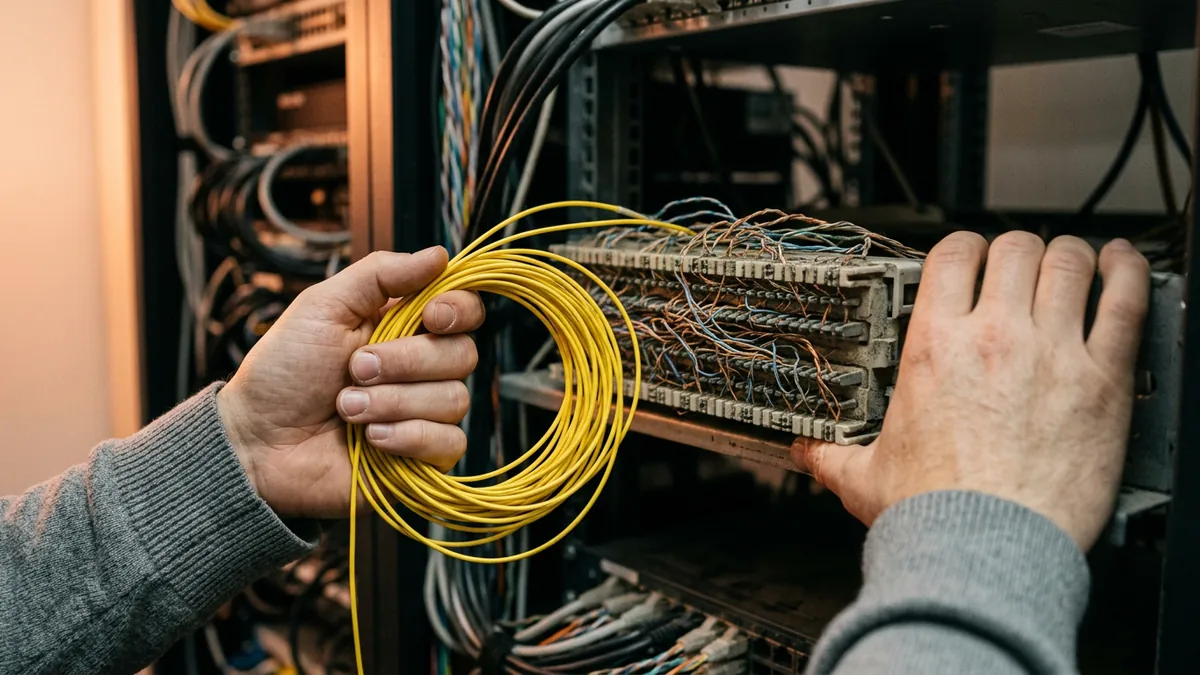
TDM stands for time-division multiplexing. It’s the way telephone networks carried voice and data for most of the last century, carving a line into fixed time slots, one conversation or one data feed per slot. T1 and DS3 circuits, SONET rings, channel banks. If you’re under 40 and came up through networking, there’s a decent chance you’ve never touched any of it. It ran fine for decades. Quietly. That was the problem, in a way. Nobody had to think about it.
Routers like the ones the FAA was installing are built for packet networks, where everything is chopped into packets and devices are constantly announcing themselves and looking for neighbors. Putting the two worlds together takes translation gear, careful testing, and people who understand what each side expects to hear from the other, and those people are not easy to find. And the FAA is not short on old equipment. The Government Accountability Office reported in September 2024 that the agency rated 51 of its 138 air traffic control systems as unsustainable and another 54 as potentially unsustainable, citing outdated functionality and a lack of spare parts, with some modernization projects not due to finish for another 10 to 13 years.
Then there’s ownership. Who holds the keys? Duffy was blunt about the vendor relationship, according to Al Jazeera’s account. “They own this network. They’re our prime contractor. I can’t go somewhere else. They own it.” The union for FAA technicians, PASS, said its members weren’t involved in the upgrade work. L3Harris says it has completed more than 70 percent of the planned conversion from copper to fiber.
Add it up. The equipment is decades old. The work is contracted out. The agency’s own technicians weren’t on the job. When something goes sideways at 3:30 on a Friday, the number of people who can look at both the legacy circuits and the new routers and say what’s actually happening is small, and they may not all work for the same organization. That’s not a criticism of anyone in El Dorado. It’s just how most long-lived networks end up.
The People Who Speak Both Languages
This is where it gets uncomfortable for my industry, too.
Before writing this, we searched our own published network engineering pages, the job description template, the interview questions, the salary guide, the bill-rate breakdown, and our network and telecom staffing pages. Nine pages. Cisco shows up 51 times across them. Juniper, 19, plus two mentions of Junos. T1, DS3, SONET, TDM, and copper? Zero. Not once. Ouch. We’ve been describing the job the way the market describes it, which is all packet, all modern, and that’s exactly the gap the FAA just fell into.
The federal wage and outlook numbers make the same point from another angle.
| Occupation (BLS) | U.S. employment, May 2025 | Median annual wage | Projected change, 2025 to 2035 |
|---|---|---|---|
| Computer network architects | 179,740 | $134,050 | +8% |
| Network and computer systems administrators | 314,340 | $99,130 | -4% |
Employment and wages are from the Bureau of Labor Statistics Occupational Employment and Wage Statistics survey for May 2025, pulled from the BLS public data API for this post. Projections come from the BLS Occupational Outlook Handbook pages for computer network architects and network and computer systems administrators.
Look at that middle row. Negative four. The administrators, the people who historically kept the old stuff running and remember why a circuit was provisioned a certain way, are projected to shrink by 4 percent over the next decade. Architects, the people designing what replaces it, grow by 8. That’s a reasonable direction for the field to go. It also means the folks who understand both ends of a migration are aging out faster than they’re being replaced, and nobody writes that into a requisition.
TDM experience isn’t extinct, to be fair. Telecom veterans have it by the truckload. What’s scarce is the hybrid, somebody who has it and can also predict how a new Juniper or Cisco box will behave when it’s bolted onto a 30-year-old circuit. That person, when you find one, tends to have gray hair, works at a carrier or a utility, and isn’t answering recruiter calls.
Your Network Has an El Dorado Somewhere
You probably don’t run air traffic control. I’d bet you still have a copper circuit you’ve forgotten about, though. Ask your facilities manager about the elevator phones, or the fire alarm panel’s dial-out line, and watch their face. Manufacturers have T1s into plants that went in during the George W. Bush years. Water districts run telemetry over leased lines older than some of the engineers maintaining them. Phone carriers have been retiring copper for years, so somebody is going to touch those circuits, on your schedule or on theirs. The carrier side of that work is its own hiring market, which our telecom staffing team covers.
Here’s the version I’d worry about. It’s made up, but only barely. Three plants. SD-WAN goes in at headquarters, no drama, then at the big plant, no drama. At the small plant two hours out on a county road, the integrator’s tech swaps the edge router on a Wednesday afternoon because nobody can remember that site ever causing trouble. The old channel bank in the closet, which still carries the alarm lines, starts choking on traffic it was never built to hear. Nobody on staff knows what a channel bank is. That last sentence is the one that costs money.
If there’s copper-to-fiber or TDM-to-IP work on your calendar for next year, these are the things I’d want answered now, while answers are cheap.
- Which of your sites still run legacy circuits, and who, by name, could explain each one?
- Has the new hardware been tested against the actual old equipment it’ll sit next to, or just against a lab that’s all new gear? The FAA’s work was described as a routine replacement done for decades.
- If one remote site misbehaves, how far can the damage travel? The FAA’s problem started at one or two sites and touched 17 of 22 centers.
- Daytime change windows. The FAA said it will reevaluate when it does this kind of work. Maintenance at major facilities usually happens at night, and this was a routine daytime replacement at a remote one.
- When the contractor owns the network, what does your own team actually know about it?
The last question is the one I get paid to care about. Most budgets skip it.

Who to Hire, and How Long to Keep Them
My advice runs backward from most project plans. Skip the migration lead for a minute. Go find whoever already knows where the old circuits live and why they were set up that way, and pay them to write it down before anyone schedules a cutover. Sometimes that’s a retired telecom tech who’d take a three-month contract staffing gig and honestly enjoy it. Sometimes it’s a field tech at your carrier who’ll talk if you buy lunch. And sometimes there’s nobody. Then at least you know how exposed you are.
After that, the seats look something like this. A network engineer who has done TDM-to-IP or copper-to-fiber cutovers before and can name the equipment. A change and test lead who builds a lab that mirrors the ugly parts of production, not just the shiny parts. And someone permanent who owns the network after the contractors leave, because the FAA’s situation shows what happens when the people who understand the network don’t all report to you. The first two are usually contract roles for the length of the project. The last one is a direct hire.
For pay, our network engineer contract bill rates breakdown covers what employers are paying by seniority, and you can sanity-check a full-time offer with the salary benchmark assistant. Expect the both-languages engineer to price toward the top of any band, since you’re paying for two careers in one person. If they’re coming off an integration-driven layoff, our piece on what the Juniper integration means for networking talent covers where some of that pool has been landing. And yes, the FAA’s other staffing story, the air traffic controller shortage, is a different problem with a similar lesson about pipelines you can’t restart overnight.
On speed, KORE1’s average time to fill an IT role is 17 days, and 92 percent of our placements are still in the seat at 12 months. Neither number helps much if nobody has written down what the role actually requires. Write it down. First.
Questions Worth Answering Before Your Own Cutover
Was the FAA ground stop a cyberattack?
Nothing points that way so far. The FAA says that based on all available evidence it has no indication of a cyberattack or an outside actor, and FBI agents are part of the team examining the router. The investigation isn’t closed, so “no indication” is the accurate phrase, not “ruled out.”
So what is a TDM network, and why is anyone still running one?
TDM, or time-division multiplexing, carries traffic in fixed time slots on circuits like T1 and DS3, and it’s still everywhere because it works and replacing it is expensive. The FAA blamed instability in its legacy TDM system for this event. Plenty of utilities, factories, and older retail sites run on the same technology.
Was it really just one router?
Not exactly. The FAA names two potential sources, a radar site in Amarillo, Texas, and a radio site in El Dorado, Arkansas, where L3Harris was deploying a new router. As a precaution it disabled the same function on more than 60 other Juniper routers and paused installs. Why the flood started hasn’t been explained.
Does any of this matter if you don’t run an airline?
More than the headlines make it look. If you’re retiring copper anywhere, you’ll have a remote site where new hardware gets plugged into old hardware, usually by an outside crew, often on a weekday afternoon. That’s the FAA’s setup in miniature, minus 3,500 airplanes.
What does an engineer who knows both TDM and modern routing cost?
$134,050 is the BLS median for computer network architects, and the person fluent in both legacy circuits and current platforms usually lands above it. Contract rates swing with seniority and city, so pull a current bill-rate benchmark before you write the budget. Money rarely stalls these searches. Finding the human does.
Contract or full-time for a copper-to-fiber project?
Both, for different seats. The cutover has an end date, so contract engineers fit it. Ownership afterward doesn’t, so that’s one permanent hire, and it’s the seat companies forget until the contractors have gone home. KORE1 fills IT roles in 17 days on average.
Before Your Next Change Window
Nobody outside that Florida lab knows what went wrong in El Dorado. We may find out in a few weeks. We may not. You don’t need the answer to do the useful thing anyway. Make a list of every legacy circuit your business still leans on and write a person’s name beside each one. Any line without a name is your El Dorado. And when a circuit finally does get retired, finish the job properly, which is the point of our guide to decommissioning legacy systems.
KORE1 has been placing technical people since 2005. If you’re about to touch old circuits and aren’t sure anyone on your team really understands them, talk to a recruiter. We’ll tell you whether the person you need exists at your budget. And if your carrier’s field tech already knows more than anyone we could send, we’ll tell you that too, and you can keep your money.
